publications
publications by categories in reversed chronological order. generated by jekyll-scholar.
2026
- TWC
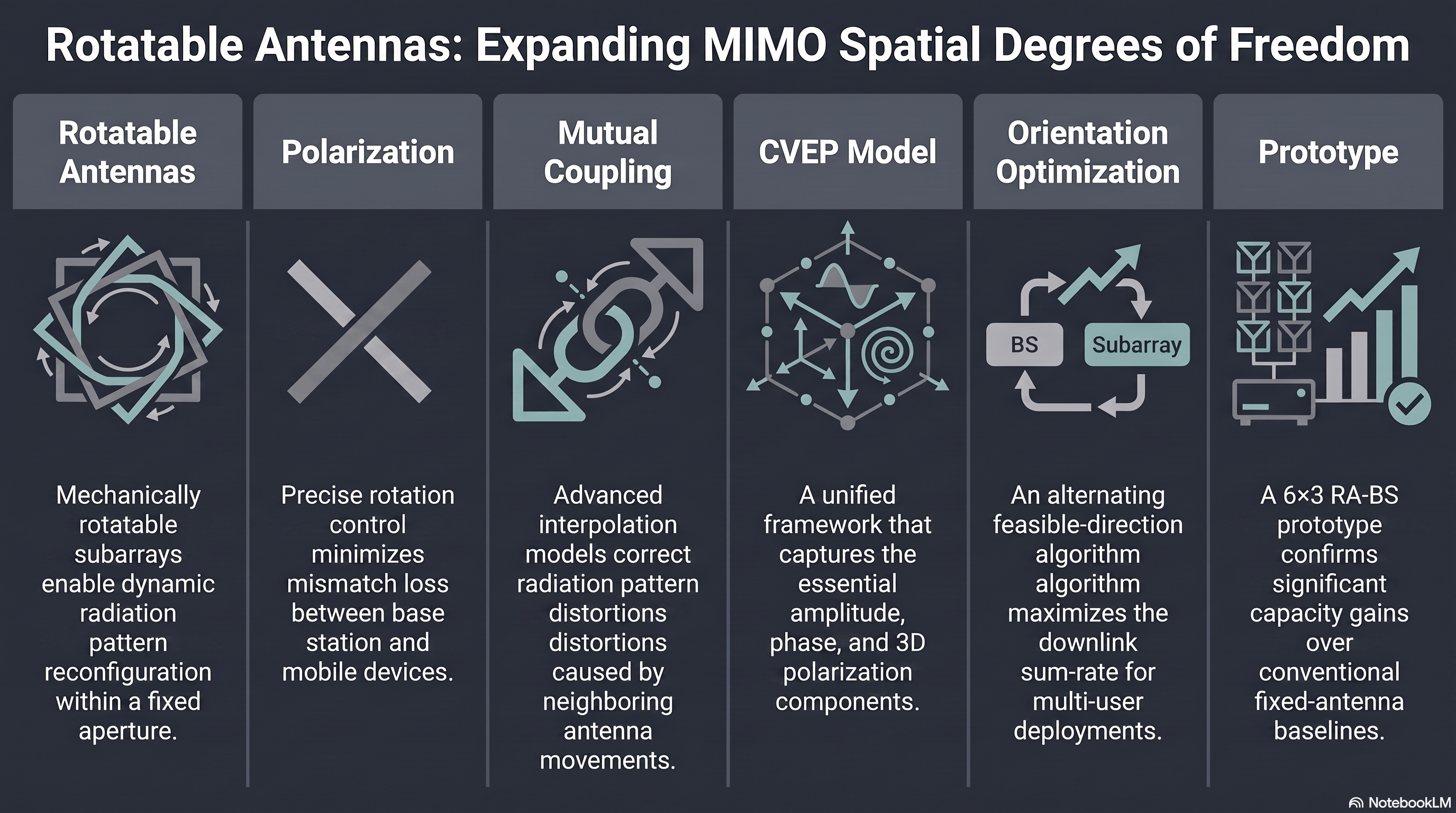 Polarization- and Mutual-Coupling-Aware Rotatable Antennas Enabled Wireless Communications: Modeling, Orientation Optimization, and PrototypingJianchuan Wei, Simin Song, Zhenyu Kang, Tengjiao Wang, Huaqiang Gao, and 2 more authorsIEEE Transactions on Wireless Communications, 2026
Rotatable antennas (RAs) expand the spatial degrees of freedom of multiple-input multiple-output (MIMO) systems beyond conventional fixed-panel arrays. However, existing evaluations often model rotation merely as a scalar gain adjustment and overlook three hardware-critical effects: the phase carried by the antenna pattern, rotation-induced changes in the polarization, and orientation-dependent mutual coupling variations. In this context, we develop a unified modeling-evaluation-optimization framework that explicitly incorporates phase, polarization, and mutual coupling effects through a rotation-explicit complex vector element pattern (CVEP).
@article{2026-twc-ra, title = {Polarization- and Mutual-Coupling-Aware Rotatable Antennas Enabled Wireless Communications: Modeling, Orientation Optimization, and Prototyping}, author = {Wei, Jianchuan and Song, Simin and Kang, Zhenyu and Wang, Tengjiao and Gao, Huaqiang and Shen, Shanpu and Chen, Xiaoming}, journal = {IEEE Transactions on Wireless Communications}, volume = {25}, pages = {18119--18135}, year = {2026}, publisher = {IEEE}, doi = {10.1109/TWC.2026.3699161}, } - arXiv
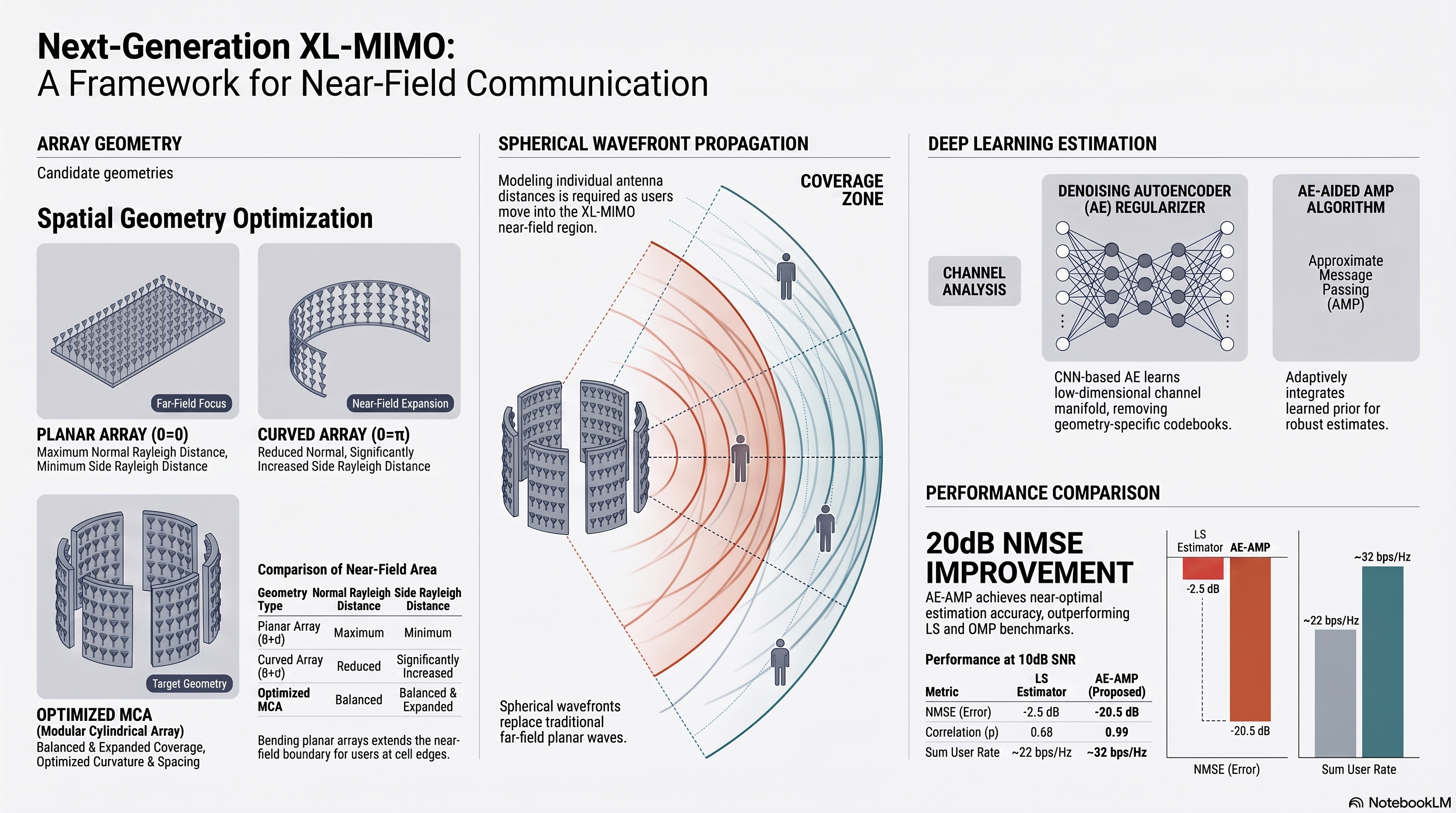 A Framework of Near-Field Communication with Different Array Geometries: Analysis, Optimization, and General Channel Estimation Algorithms Based on Deep LearningKangda Zhi, Yi Song, Tianyu Yang, Tuo Wu, Tengjiao Wang, and 3 more authorsarXiv preprint arXiv:2605.17690, 2026
This work establishes a framework of near-field communication under different array geometries of extremely large-scale multiple-input multiple-output (XL-MIMO). We first formulate the near-field spatial non-stationary channel model which is characterized by the distance between the user and each antenna on uniform and modular curved arrays. By fixing the total number of antennas while varying the degree of curvature, we investigate a fair case where the horizontal arc length of the curved array is the same as the planar array. We explicitly unveil the non-trivial impact of array curvature on extending the near-field region for cell edges. Then, for arbitrary array geometries and arbitrary-field channels, we estimate the spatial-domain channel by tackling a compressed sensing problem with a learned regularizer. Without relying on specific codebooks, we propose a denoising autoencoder-aided approximated message passing algorithm and provide the corresponding theoretical replica bound. Finally, based on the estimated channel, we propose an optimization algorithm to maximize the sum user rate for sub-connected XL-MIMO systems by jointly designing the array geometry and hybrid precoding in the downlink.
@article{2026-arxiv-nf,
  title = {A Framework of Near-Field Communication with Different Array Geometries: Analysis, Optimization, and General Channel Estimation Algorithms Based on Deep Learning},
  author = {Zhi, Kangda and Song, Yi and Yang, Tianyu and Wu, Tuo and Wang, Tengjiao and Xue, Songyan and Wu, Fangzhou and Caire, Giuseppe},
  journal = {arXiv preprint arXiv:2605.17690},
  year = {2026},
  doi = {10.48550/arXiv.2605.17690},
}
2025
- arXiv
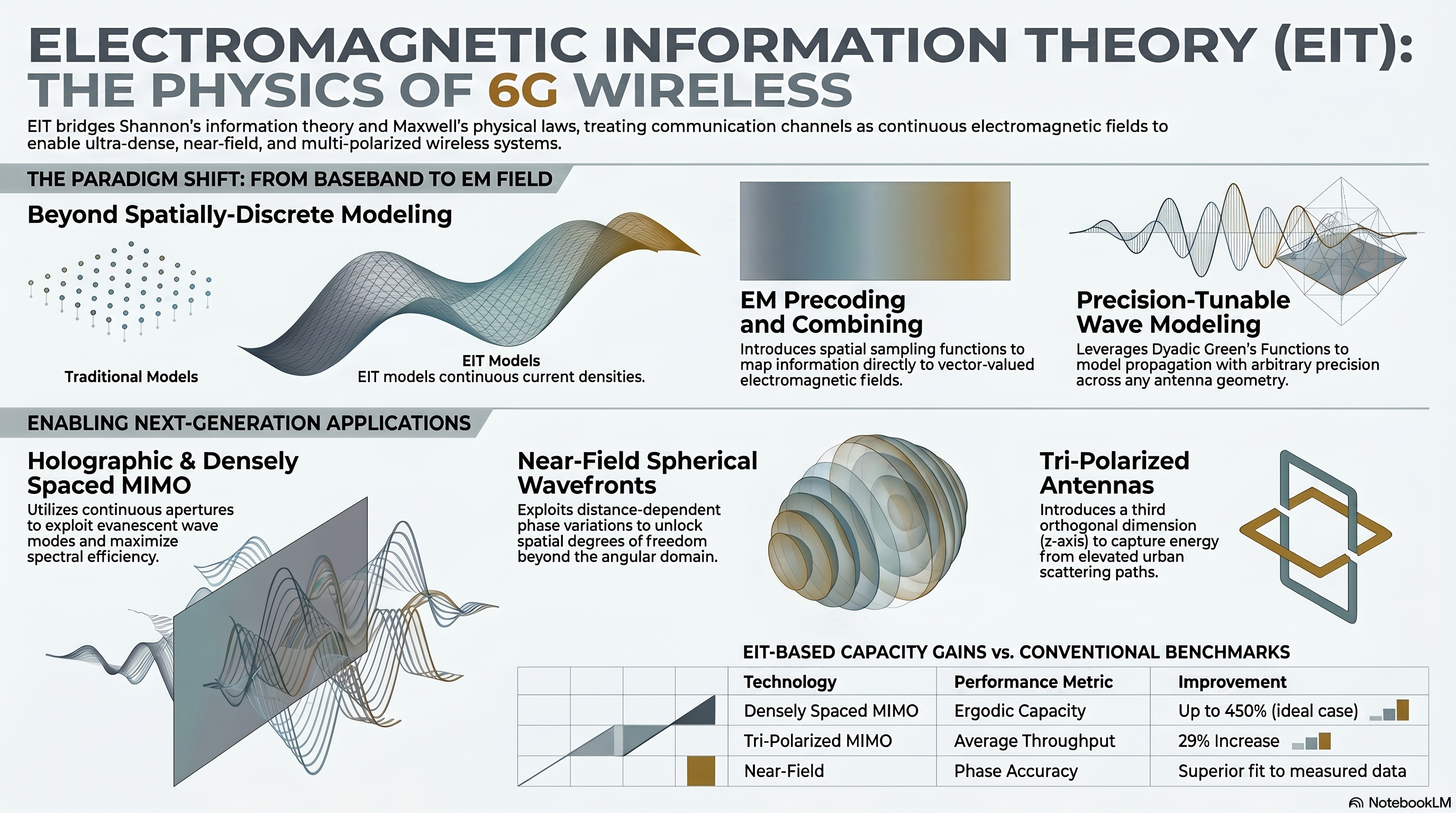 Electromagnetic Information Theory: Fundamentals, Paradigm Shifts, and ApplicationsTengjiao Wang, Zhenyu Kang, Ting Li, Zhihui Chen, Shaobo Wang, and 3 more authorsarXiv preprint arXiv:2503.06651, 2025
This paper explores the emerging research direction of electromagnetic information theory (EIT), which aims to integrate traditional Shannon-based methodologies with physical consistency, particularly the electromagnetic properties of communication channels. We propose an EIT-based multiple-input multiple-output (MIMO) paradigm that enhances conventional spatially-discrete MIMO models by incorporating the concepts of electromagnetic (EM) precoding and EM combining. This approach aims to improve the modeling of next-generation systems while remaining consistent with Shannon’s theoretical foundations. We explore typical EIT applications, such as densely spaced MIMO, near-field communications, and tri-polarized antennas, and analyze their channel characteristics through theoretical simulations and measured datasets. The paper also discusses critical research challenges and opportunities for EIT applications from an industrial perspective, emphasizing the field’s potential for practical applications.
@article{2025-arxiv,
  title = {Electromagnetic Information Theory: Fundamentals, Paradigm Shifts, and Applications},
  author = {Wang, Tengjiao and Kang, Zhenyu and Li, Ting and Chen, Zhihui and Wang, Shaobo and Lin, Yingpei and Wang, Yan and Yu, Yichuan},
  journal = {arXiv preprint arXiv:2503.06651},
  year = {2025},
  doi = {10.48550/arXiv.2503.06651},
}
2024
- JSAC
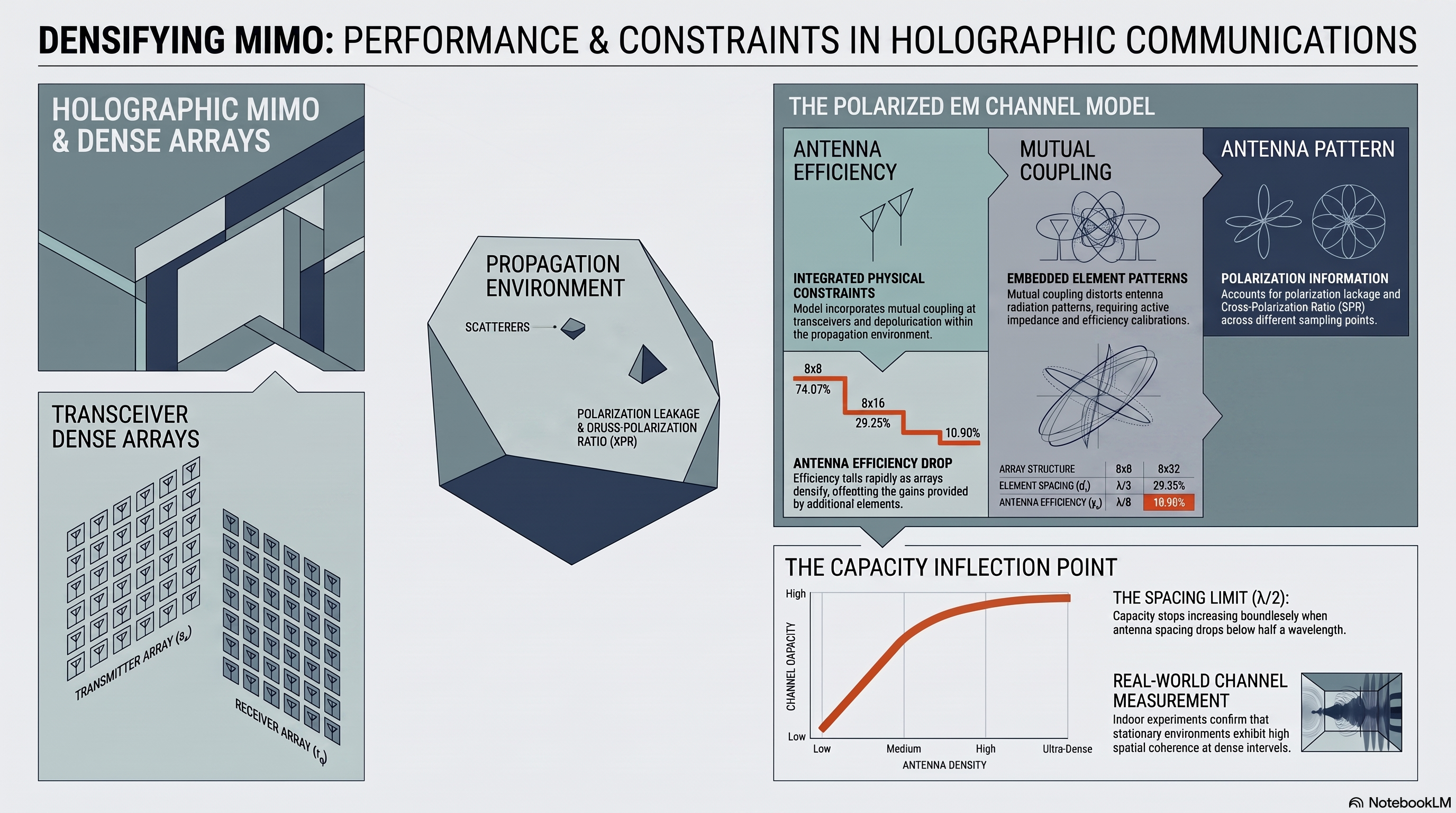 Densifying MIMO: Channel Modeling, Physical Constraints, and Performance Evaluation for Holographic CommunicationsYongxi Liu, Ming Zhang, Tengjiao Wang, Anxue Zhang, and Mérouane DebbahIEEE Journal on Selected Areas in Communications, 2024
As the backbone of the fifth-generation (5G) cellular network, massive multiple-input multiple-output (MIMO) encounters a significant challenge in practical applications: how to deploy a large number of antenna elements within limited spaces. Recently, holographic communication has emerged as a potential solution to this issue. It employs dense antenna arrays and provides a tractable model. Nevertheless, some challenges must be addressed to actualize this innovative concept. One is the mutual coupling among antenna elements within an array. When the element spacing is small, near-field coupling becomes the dominant factor that strongly restricts the array performance. Another is the polarization of electromagnetic waves. As an intrinsic property, it was not fully considered in the previous channel modeling of holographic communication. The third is the lack of real-world experiments to show the potential and possible defects of a holographic communication system. In this paper, we propose an electromagnetic channel model based on the characteristics of electromagnetic waves. This model encompasses the impact of mutual coupling in the transceiver sides and the depolarization in the propagation environment. Furthermore, by approximating an infinite array, the performance restrictions of large-scale dense antenna arrays are also studied theoretically to exploit the potential of the proposed channel. In addition, numerical simulations and a channel measurement experiment are conducted. The findings reveal that within limited spaces, the coupling effect, particularly for element spacing smaller than half of the wavelength, is the primary factor leading to the inflection point for the performance of holographic communications.
@article{2024-jsac, title = {Densifying MIMO: Channel Modeling, Physical Constraints, and Performance Evaluation for Holographic Communications}, author = {Liu, Yongxi and Zhang, Ming and Wang, Tengjiao and Zhang, Anxue and Debbah, M{\'e}rouane}, journal = {IEEE Journal on Selected Areas in Communications}, volume = {42}, number = {6}, pages = {1504--1518}, year = {2024}, publisher = {IEEE}, selected = true, doi = {10.1109/JSAC.2024.3389122}, } - TVT
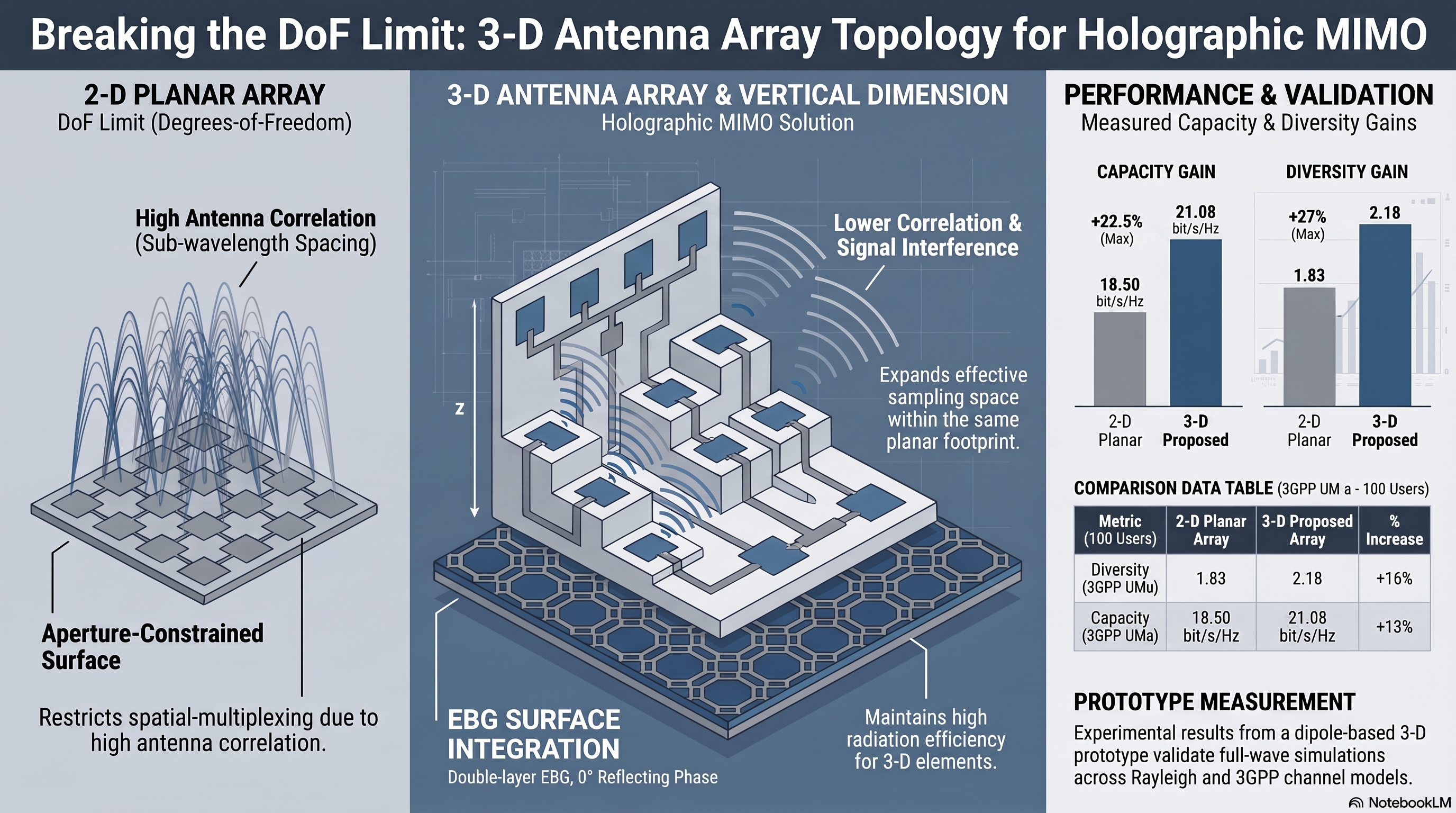 Breaking the Degrees-of-Freedom Limit of Holographic MIMO Communications: A 3-D Antenna Array TopologyShuai SA Yuan, Jie Wu, Hongjing Xu, Tengjiao Wang, Da Li, and 6 more authorsIEEE Transactions on Vehicular Technology, 2024
The performance of holographic multiple-input multiple-output (MIMO) communications, employing two-dimensional (2-D) planar antenna arrays, is typically compromised by finite degrees-of-freedom (DOF) stemming from limited array size. The DOF constraint becomes significant when the element spacing approaches approximately half a wavelength, thereby restricting the overall performance of MIMO systems. To break this inherent limitation, we propose a novel three-dimensional (3-D) antenna array that strategically explores the untapped vertical dimension. We investigate the performance of MIMO systems utilizing 3-D arrays across different multi-path scenarios, encompassing Rayleigh channels with varying angular spreads and the 3 rd generation partnership project (3GPP) channels. We subsequently showcase the advantages of these 3-D arrays over their 2-D counterparts with the same aperture sizes. As a proof of concept, a practical dipole-based 3-D array, facilitated by an electromagnetic band-gap (EBG) reflecting surface, is conceived, constructed, and evaluated. The experimental results align closely with full-wave simulations, and channel simulations substantiate that the DOF and capacity constraints of traditional holographic MIMO systems can be surpassed by adopting such a 3-D array configuration.
@article{2024-tvt, title = {Breaking the Degrees-of-Freedom Limit of Holographic MIMO Communications: A 3-D Antenna Array Topology}, author = {Yuan, Shuai SA and Wu, Jie and Xu, Hongjing and Wang, Tengjiao and Li, Da and Chen, Xiaoming and Huang, Chongwen and Sun, Sheng and Zheng, Shilie and Zhang, Xianmin and others}, journal = {IEEE Transactions on Vehicular Technology}, volume = {73}, number = {8}, pages = {11276--11288}, year = {2024}, publisher = {IEEE}, selected = true, doi = {10.1109/TVT.2024.3372704}, } - AP-S
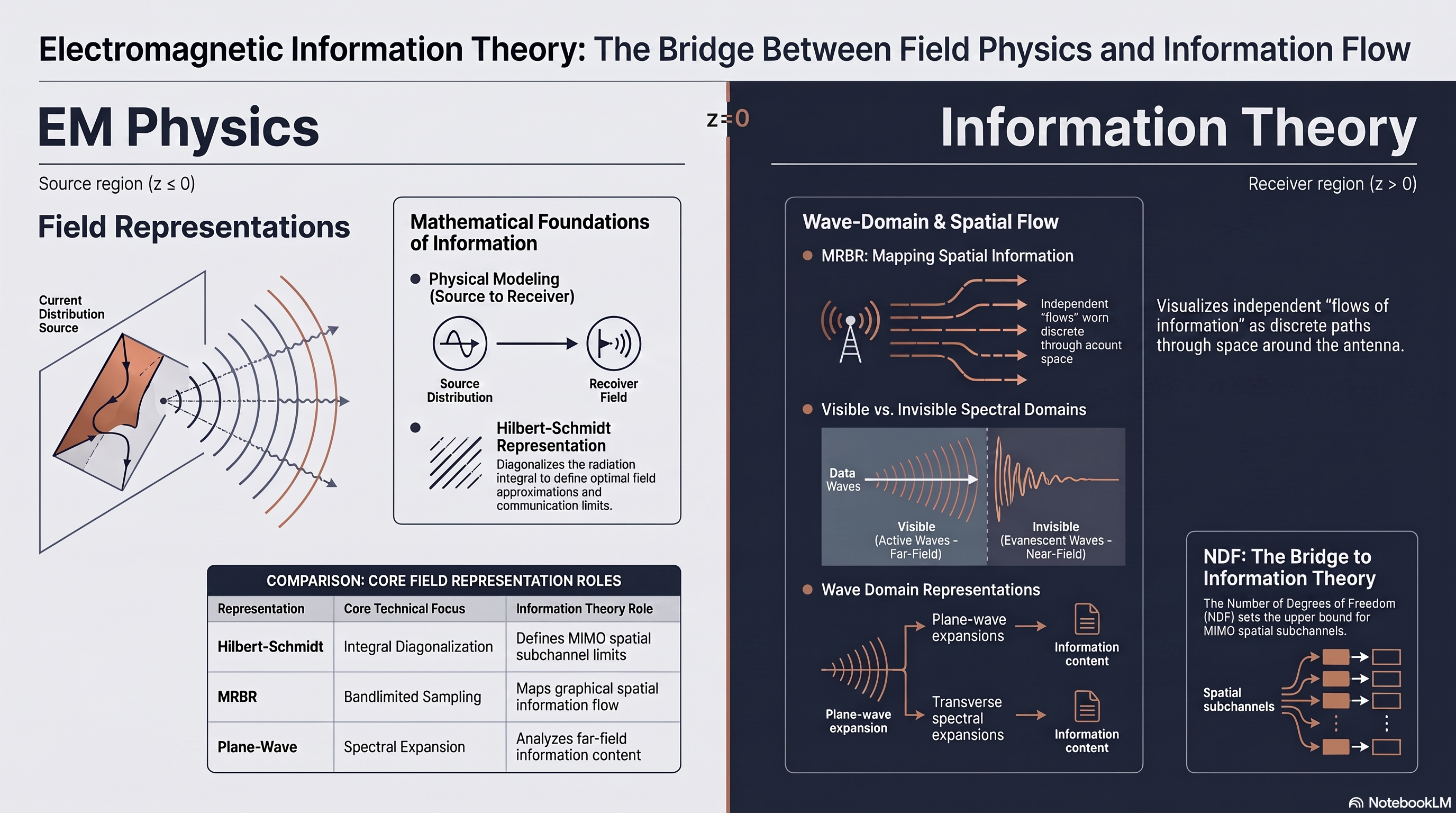 Some Notes on the Role of Field Representations in Electromagnetic Information TheoryMarco Donald Migliore, Tengjiao Wang, and Marco Di RenzoIn 2024 IEEE International Symposium on Antennas and Propagation and INC/USNC-URSI Radio Science Meeting (AP-S/INC-USNC-URSI), 2024
Electromagnetic Signal and Information Theory (ESIT) is an emerging field that integrates electromagnetic and information theories to explore the constraints imposed by the laws of electromagnetism on wireless telecommunications systems. This contribution will discuss four different representations of the field in free space. From an electromagnetic point of view, they are equivalent, all allowing an accurate representation of the field. From the ESIT perspective, they play quite different roles, focusing in some cases on field information and other cases on the physical implementation of the ESIT.
@inproceedings{2024-aps,
  title = {Some Notes on the Role of Field Representations in Electromagnetic Information Theory},
  author = {Migliore, Marco Donald and Wang, Tengjiao and Di Renzo, Marco},
  booktitle = {2024 IEEE International Symposium on Antennas and Propagation and INC/USNC-URSI Radio Science Meeting (AP-S/INC-USNC-URSI)},
  pages = {1377--1378},
  year = {2024},
  organization = {IEEE},
  doi = {10.1109/AP-S/INC-USNC-URSI52054.2024.10686239},
}
2023
- ICC
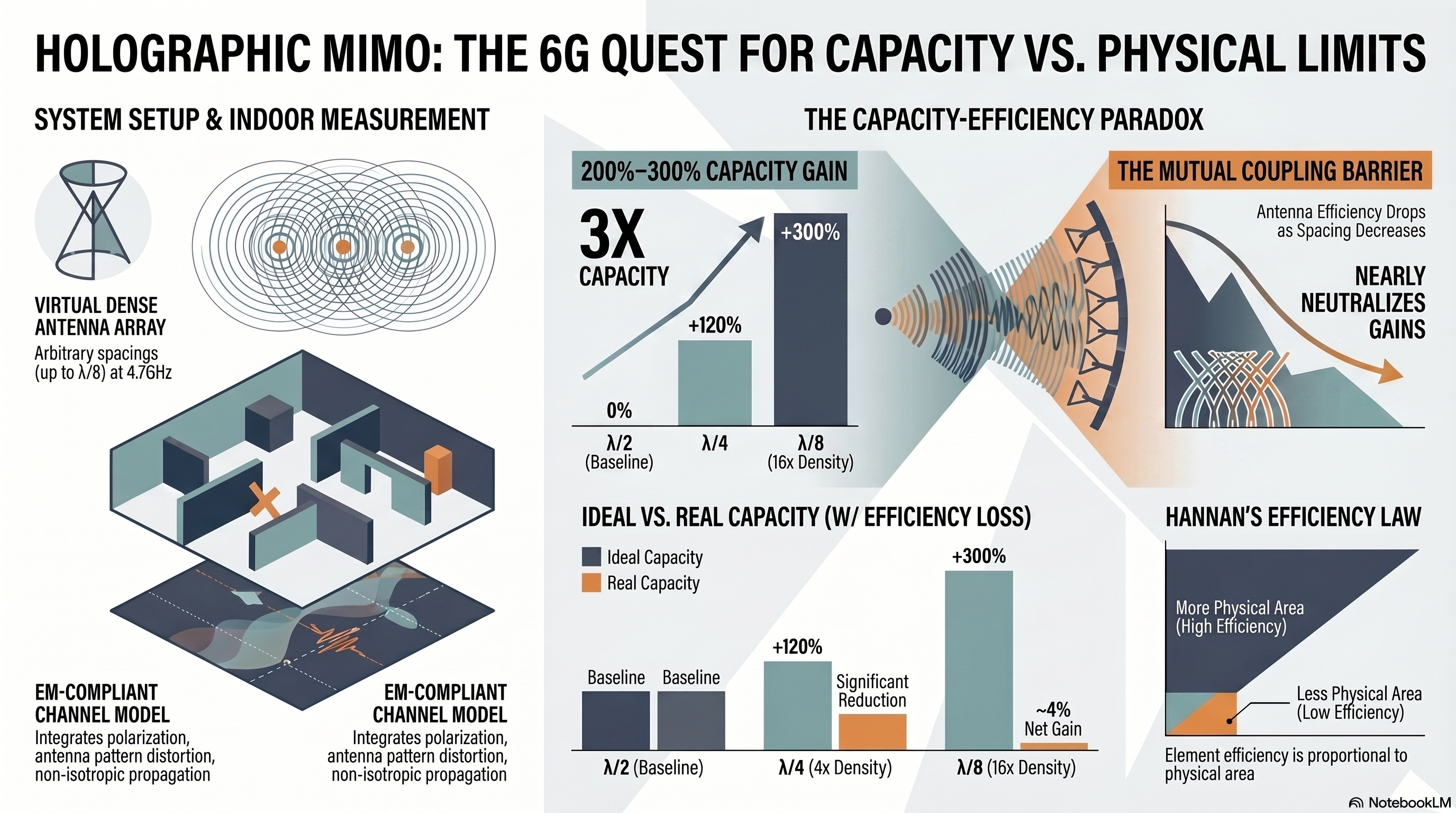 Channel Measurement for Holographic MIMO: Benefits and Challenges of Spatial OversamplingTengjiao Wang, Yongxi Liu, Ming Zhang, Wei EI Sha, Cen Ling, and 2 more authorsIn ICC 2023-IEEE International Conference on Communications, 2023
In this paper, the channel of an indoor holographic multiple-input multiple-output (MIMO) system is measured. It is demonstrated through experiments for the first time that the spatial oversampling of holographic MIMO systems is able to increase the capacity of a wireless communication system significantly. However, the antenna efficiency is the most crucial challenge preventing us from getting the capacity improvement. An extended EM-compliant channel model is also proposed for holographic MIMO systems, which is able to take the non-isotropic characteristics of the propagation environment, the antenna pattern distortion, the antenna efficiency, and the polarization characteristics into consideration.
@inproceedings{2023-icc,
  title = {Channel Measurement for Holographic MIMO: Benefits and Challenges of Spatial Oversampling},
  author = {Wang, Tengjiao and Liu, Yongxi and Zhang, Ming and Sha, Wei EI and Ling, Cen and Li, Chao and Wang, Shaobo},
  booktitle = {ICC 2023-IEEE International Conference on Communications},
  pages = {5036--5041},
  year = {2023},
  organization = {IEEE},
  doi = {10.1109/ICC45041.2023.10279384},
}
2022
- VTM
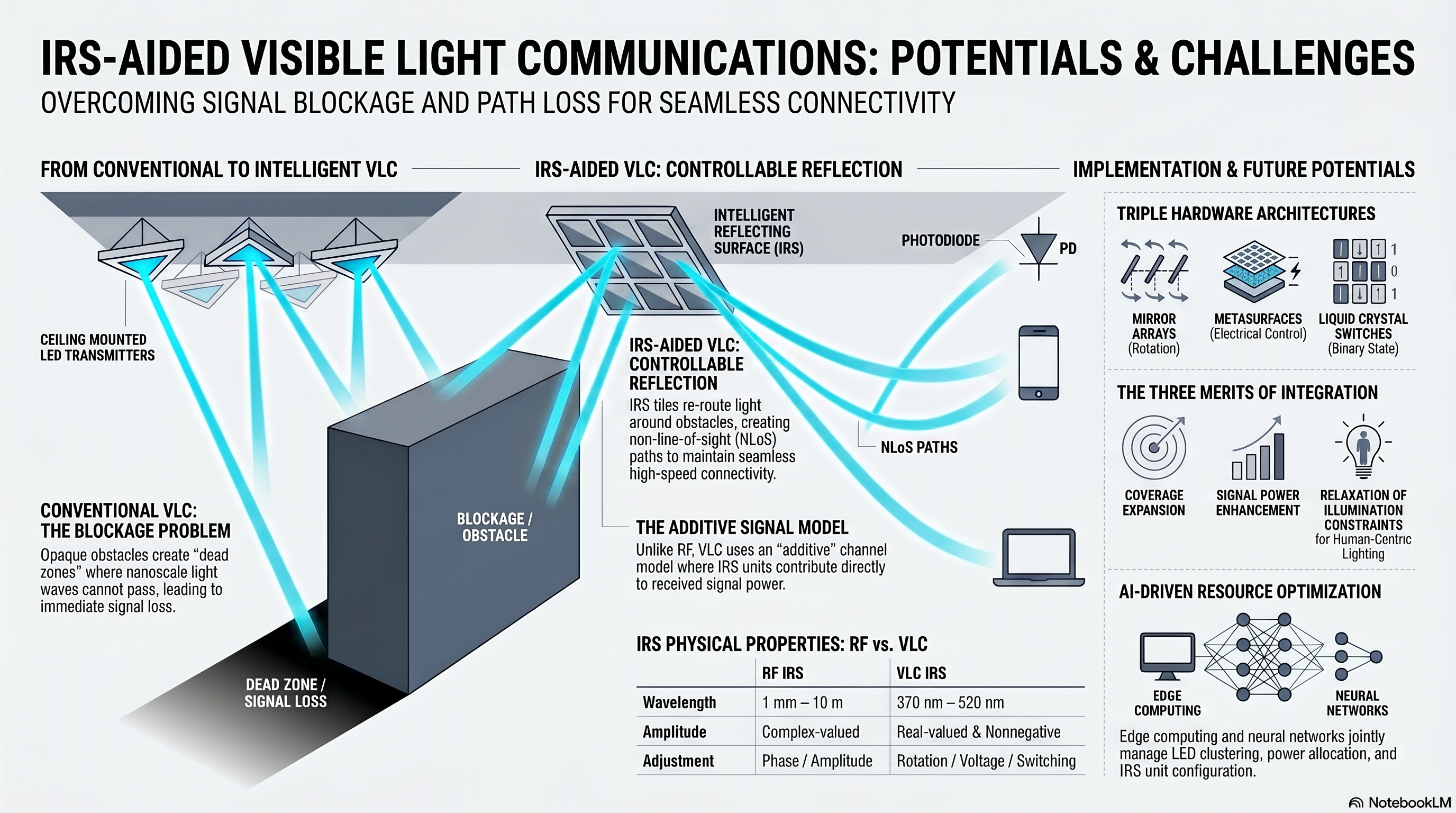 Intelligent Reflecting Surface-Aided Visible Light Communications: Potentials and ChallengesShiyuan Sun, Tengjiao Wang, Fang Yang, Jian Song, and Zhu HanIEEE Vehicular Technology Magazine, 2022
To satisfy the explosive growing traffic demands in wireless communications, visible light communication (VLC) performs as a promising technology due to its broad and license-free bandwidth. However, practical VLC systems usually confront challenges, such as blockage and high path loss. Different from traditional VLC techniques, intelligent reflecting surface (IRS)-aided VLC can achieve a remarkable performance gain.
@article{2022-irs-vlc, title = {Intelligent Reflecting Surface-Aided Visible Light Communications: Potentials and Challenges}, author = {Sun, Shiyuan and Wang, Tengjiao and Yang, Fang and Song, Jian and Han, Zhu}, journal = {IEEE Vehicular Technology Magazine}, volume = {17}, number = {1}, pages = {47--56}, year = {2022}, publisher = {IEEE}, selected = true, doi = {10.1109/MVT.2021.3127869}, } - WCM
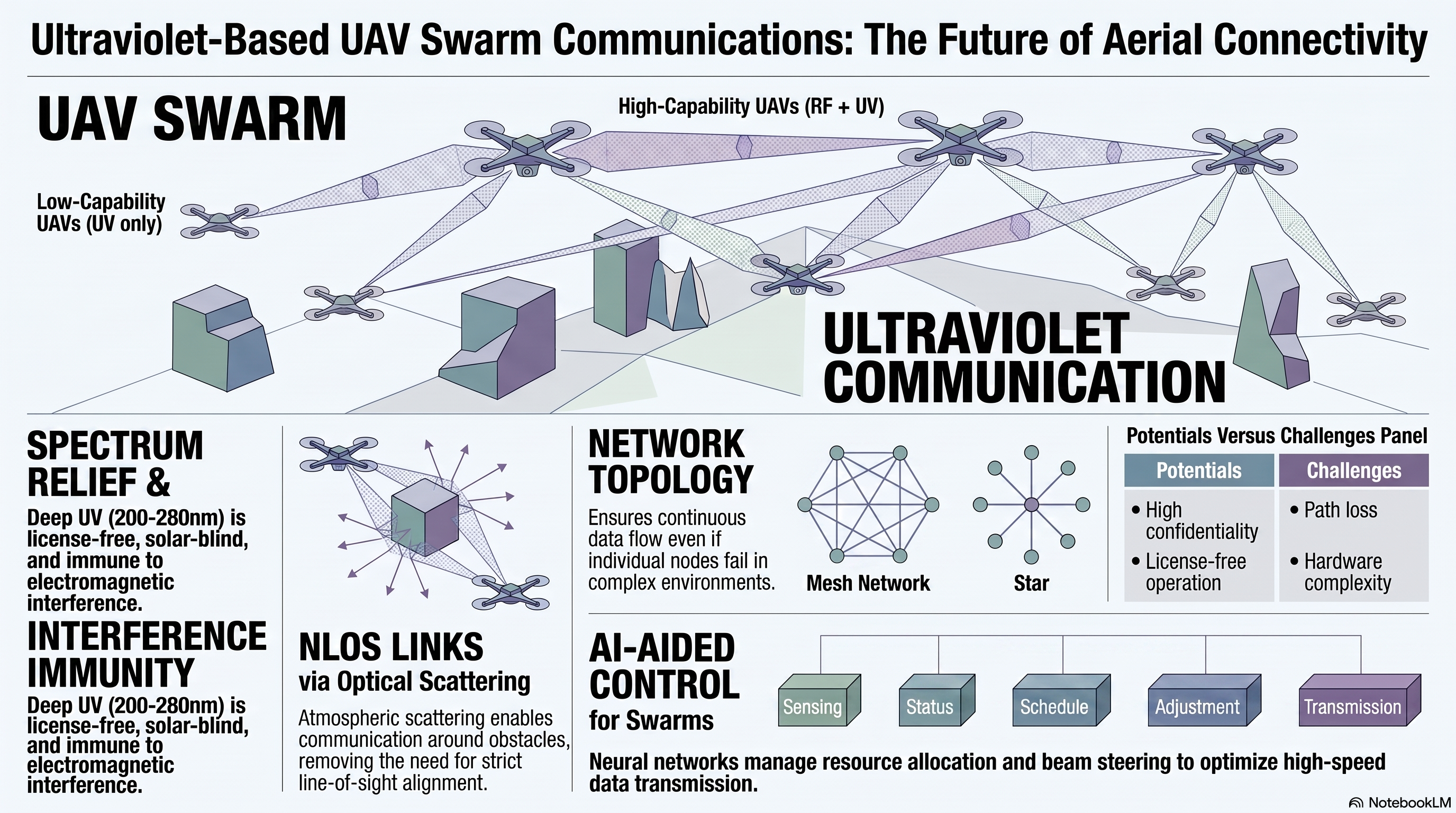 Ultraviolet-Based UAV Swarm Communications: Potentials and ChallengesGuozhi Chen, Tianfeng Wu, Fang Yang, Tengjiao Wang, Jian Song, and 1 more authorIEEE Wireless Communications, 2022
Unmanned aerial vehicle (UAV) swarm communication has received increasing attention thanks to its intriguing advantages, such as low costs, high mobility, and deployment convenience. However, this technology is also facing certain new challenges, for example, RF spectrum scarcity, interference, and network connectivity. To this end, ultraviolet (UV) communication is introduced in this article to tackle these problems due to its distinctive benefits, such as license-free operation, immunity to electromagnetic interference, and the ability of non-line-of-sight transmission. First, a comparison between UV communication and other alternatives is presented. Then the structural designs of the high-capability UAV and the low-capability UAV, the system communication protocol and mutual interference, and the network topology of the UV-based UAV swarm are investigated. Further, the bit error rate performance, data rate, and communication range are analyzed. In the end, an artificial-intelligence-aided UV-based UAV swarm system is put forward to tackle users’ complicated requirements. Simultaneously, the challenges are discussed to direct future research work.
@article{2022-wcm, title = {Ultraviolet-Based UAV Swarm Communications: Potentials and Challenges}, author = {Chen, Guozhi and Wu, Tianfeng and Yang, Fang and Wang, Tengjiao and Song, Jian and Han, Zhu}, journal = {IEEE Wireless Communications}, volume = {29}, number = {5}, pages = {84--90}, year = {2022}, publisher = {IEEE}, selected = true, doi = {10.1109/MWC.007.2100405}, } - GLOBECOM
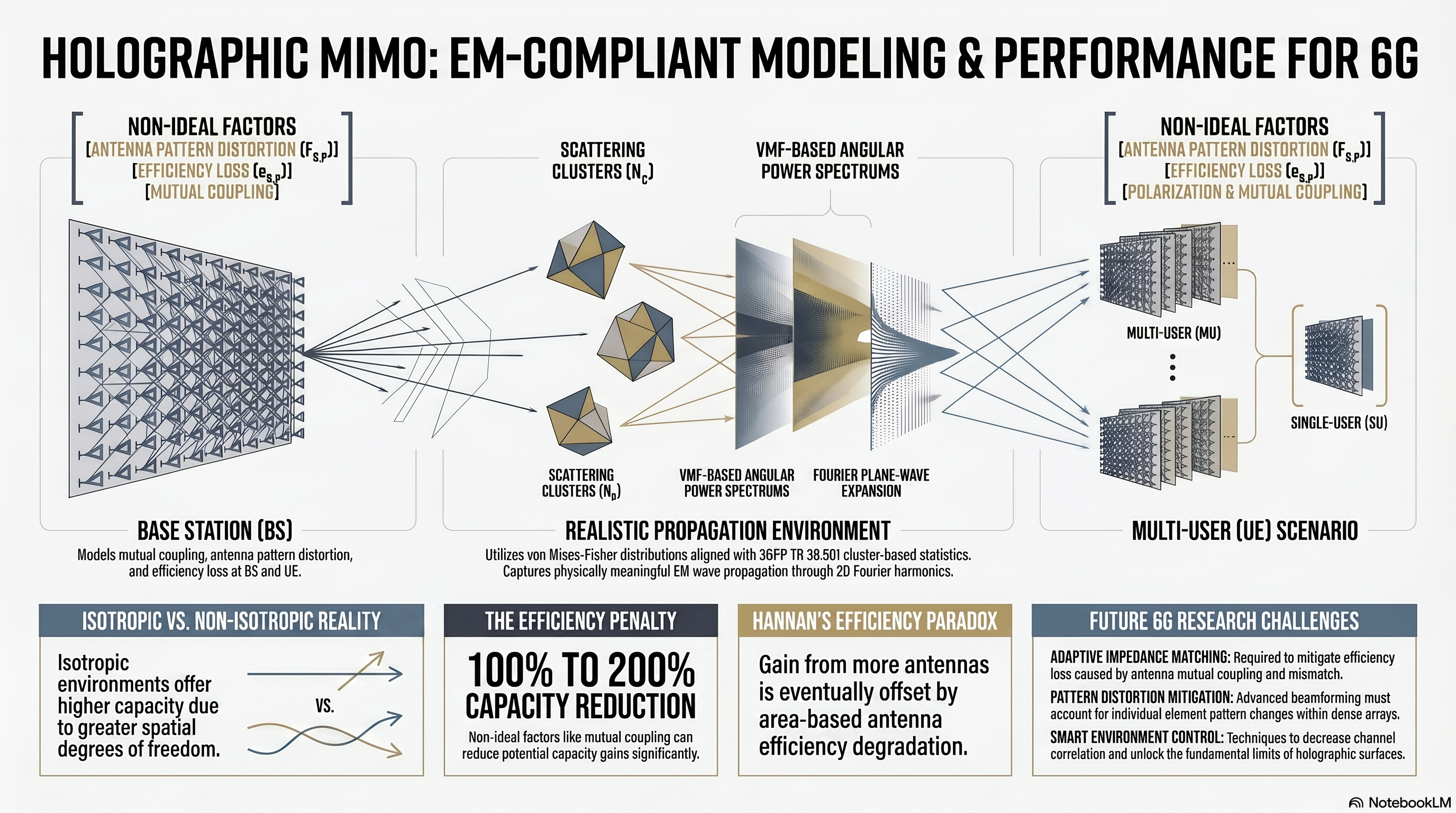 Electromagnetic-Compliant Channel Modeling and Performance Evaluation for Holographic MIMOTengjiao Wang, Wei Han, Zhimeng Zhong, Jiyong Pang, Guohua Zhou, and 2 more authorsIn 2022 IEEE Globecom Workshops (GC Wkshps), 2022
Recently, the concept of holographic multiple-input multiple-output (MIMO) is emerging as one of the promising technologies beyond massive MIMO. Many challenges need to be addressed to bring this novel idea into practice, including electromagnetic (EM)-compliant channel modeling and accurate performance evaluation. In this paper, an EM-compliant channel model is proposed for the holographic MIMO systems, which is able to model both the characteristics of the propagation channel and the non-ideal factors caused by mutual coupling at the transceivers, including the antenna pattern distortion and the decrease of antenna efficiency. Based on the proposed channel model, a more realistic performance evaluation is conducted to show the performance of the holographic MIMO system in both the single-user and the multi-user scenarios. Key challenges and future research directions are further provided based on the theoretical analyses and numerical results.
@inproceedings{2022-globecom, title = {Electromagnetic-Compliant Channel Modeling and Performance Evaluation for Holographic MIMO}, author = {Wang, Tengjiao and Han, Wei and Zhong, Zhimeng and Pang, Jiyong and Zhou, Guohua and Wang, Shaobo and Li, Qiang}, booktitle = {2022 IEEE Globecom Workshops (GC Wkshps)}, pages = {747--752}, year = {2022}, organization = {IEEE}, selected = true, doi = {10.1109/GCWkshps56602.2022.10008519}, } - ICCT
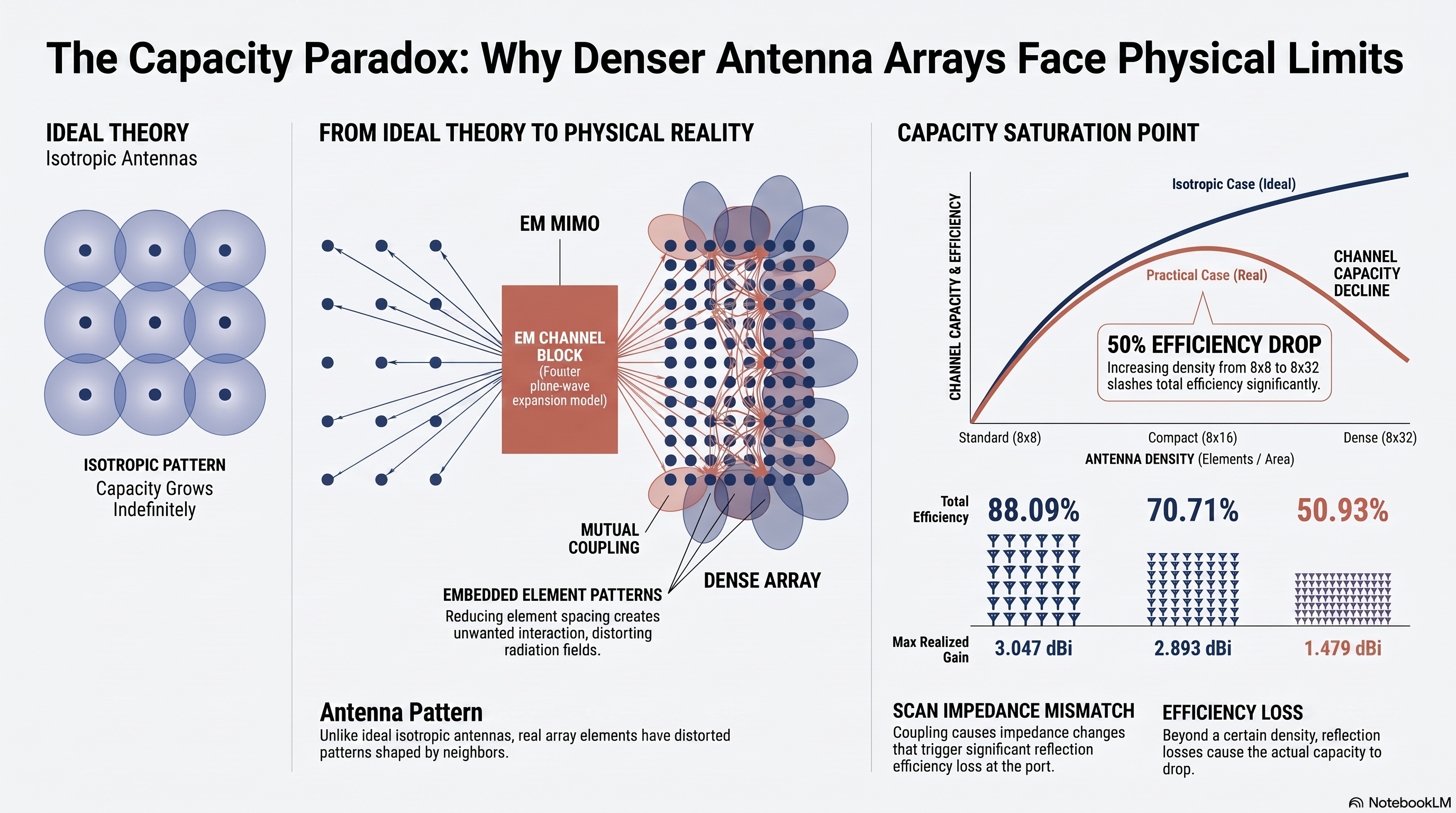 Effect of Antenna Pattern on the Electromagnetic MIMO CommunicationYongxi Liu, Ming Zhang, and Tengjiao WangIn 2022 IEEE 22nd International Conference on Communication Technology (ICCT), 2022
Using ideas from the Fourier plane-wave expansion of a channel model, we establish an electromagnetic (EM) channel model considering the effect of both antenna sides and propagation environment. The coupling effect between antennas becomes more and more serious with the reduction of antenna element spacing. Due to scan impedance mismatch caused by coupling effect, each individual element in an array suffers from the loss of reflection efficiency, which leads to the decrease in channel capacity. With numerical simulation, we show that under this revised model, channel capacity will not increase unboundedly as the number of antenna elements in a fixed-size array increases.
@inproceedings{2022-icct, title = {Effect of Antenna Pattern on the Electromagnetic MIMO Communication}, author = {Liu, Yongxi and Zhang, Ming and Wang, Tengjiao}, booktitle = {2022 IEEE 22nd International Conference on Communication Technology (ICCT)}, pages = {148--151}, year = {2022}, organization = {IEEE}, doi = {10.1109/ICCT56141.2022.10072734}, } - VTC
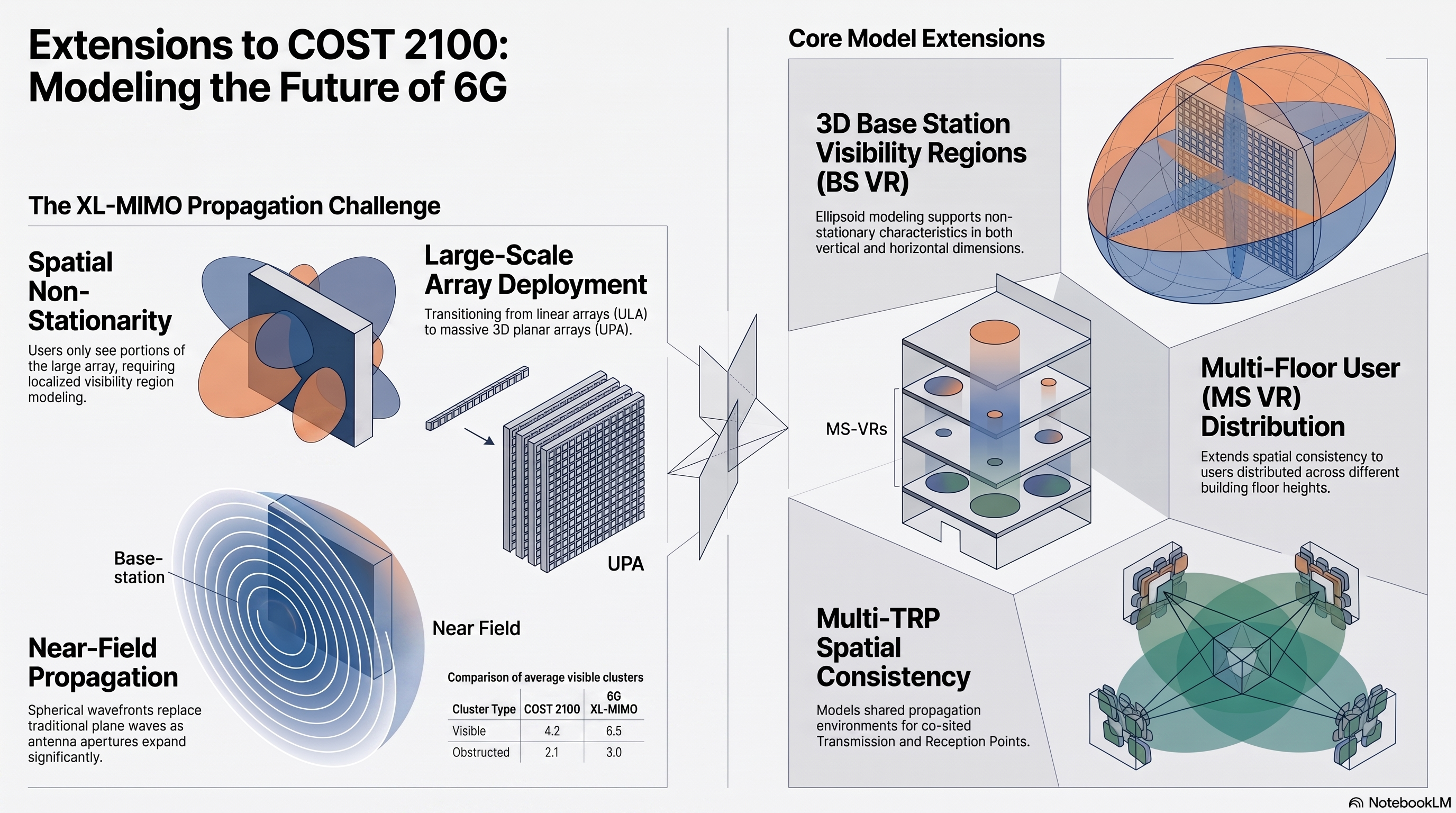 Extensions to COST 2100 Channel Model for Extremely Large-Scale MIMOLi Fan, Zhimeng Zhong, Chao Wang, Qibo Qin, Wei Han, and 1 more authorIn 2022 IEEE 95th Vehicular Technology Conference:(VTC2022-Spring), 2022
Extremely large-scale multiple-input multiple-output (XL-MIMO) system providing more degrees of freedom and beamforming gain, can effectively increase the capacity and coverage of wireless networks, which has become one of the key technologies for 6G. However, the near-field and non-stationary effects will appear as the array aperture expands. Therefore, existing channel models such as COST 2100 are extended to model these propagation effects. Considering the actual deployment of extremely large-scale antennas, this paper further extends the COST 2100 channel, including a) extending BS VR to 3D modeling to support the non-stationary characteristics of large-scale arrays in vertical and horizontal dimensions; b) extending the distribution of MS VR in vertical height to support user equipments (UEs) which are distributed on floors at different heights; c) extending models to support spatially consistent propagation characteristics between multi-TRPs. Finally, we show that our modeling method is reasonable through parameter tuning and simulation, and it can be used to evaluate the system performance of large-scale MIMO with different deployment morphologies.
@inproceedings{2022-vtc,
  title = {Extensions to COST 2100 Channel Model for Extremely Large-Scale MIMO},
  author = {Fan, Li and Zhong, Zhimeng and Wang, Chao and Qin, Qibo and Han, Wei and Wang, Tengjiao},
  booktitle = {2022 IEEE 95th Vehicular Technology Conference:(VTC2022-Spring)},
  pages = {1--5},
  year = {2022},
  organization = {IEEE},
  doi = {10.1109/VTC2022-Spring54337.2022.9868967},
}
2021
- IOTJ
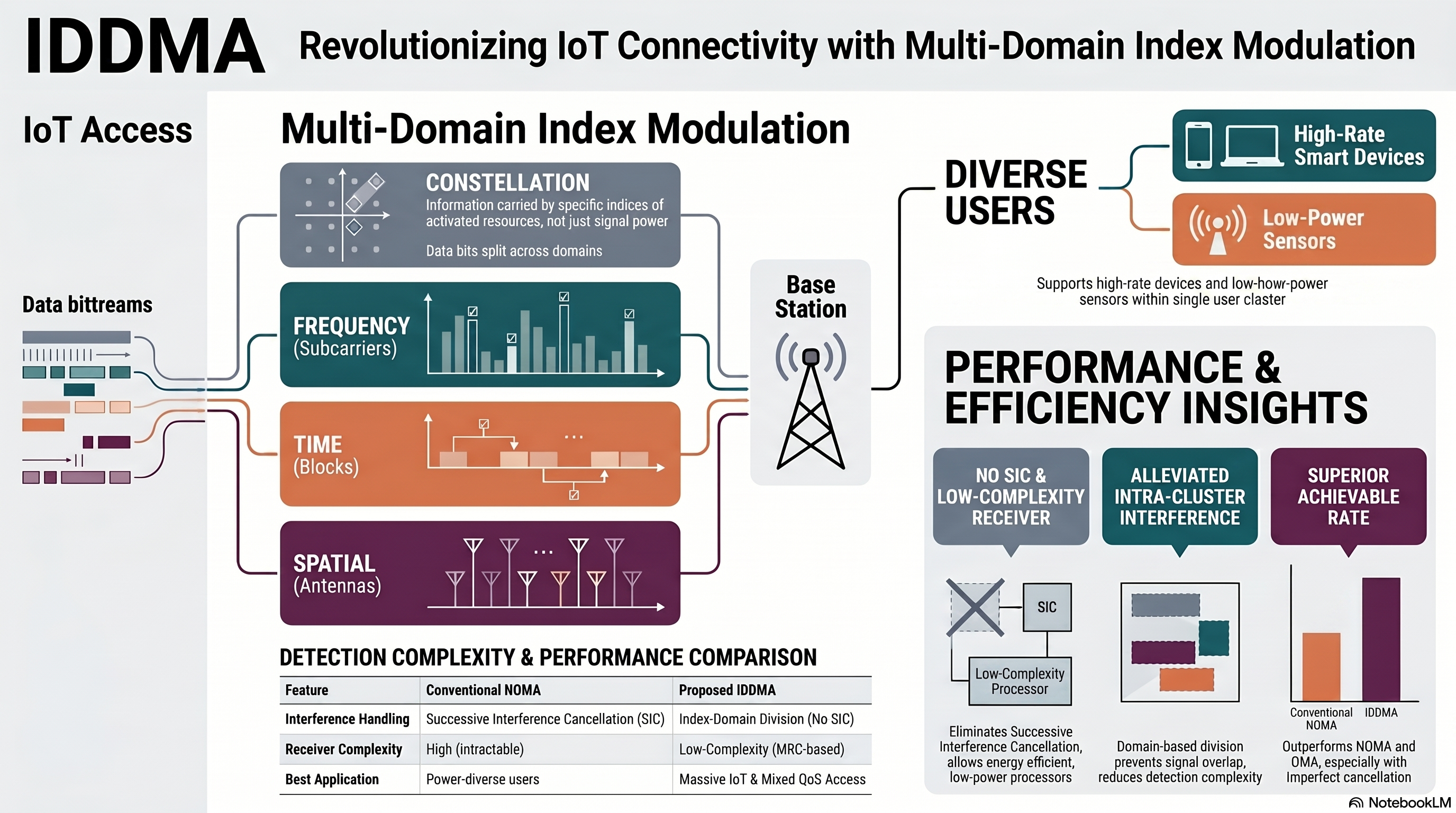 Index-Domain Division Multiple Access for IoT ApplicationsTengjiao Wang, Fang Yang, Changyong Pan, Jian Song, and Zhu HanIEEE Internet of Things Journal, 2021
Facing the worldwide explosive growth of the wireless devices, the future wireless network is required to provide seamless access for the users with diverse Quality-of-Service (QoS) requirements. In this article, a novel multiple access scheme based on the principle of multidomain index modulation is proposed to address the downlink multiple access problem for users with diverse QoS requirements, including the Internet-of-Things (IoT) devices and the smart electronic devices. Unlike the conventional nonorthogonal multiple access (NOMA) schemes which utilize power-domain diversities to realize multiple access, in the proposed scheme, information for different users is conveyed by different domains of the transmitted signals, including the constellation domain, frequency domain, time domain, and spatial domain. As a result, the intracluster interference among users is alleviated and the successive interference cancellation is avoided to reduce the computational complexity of signal detection at the receiver side, which is well suited for the IoT devices. The closed form lower bounds and approximations of the achievable rate of the proposed scheme are further derived to provide accurate estimation of the achievable rate of the communication system. Simulation results validate the superior performance of the proposed scheme over the conventional orthogonal and NOMA schemes.
@article{2021-iotj, title = {Index-Domain Division Multiple Access for IoT Applications}, author = {Wang, Tengjiao and Yang, Fang and Pan, Changyong and Song, Jian and Han, Zhu}, journal = {IEEE Internet of Things Journal}, volume = {8}, number = {11}, pages = {9014--9029}, year = {2021}, publisher = {IEEE}, doi = {10.1109/JIOT.2021.3055828}, } - OE
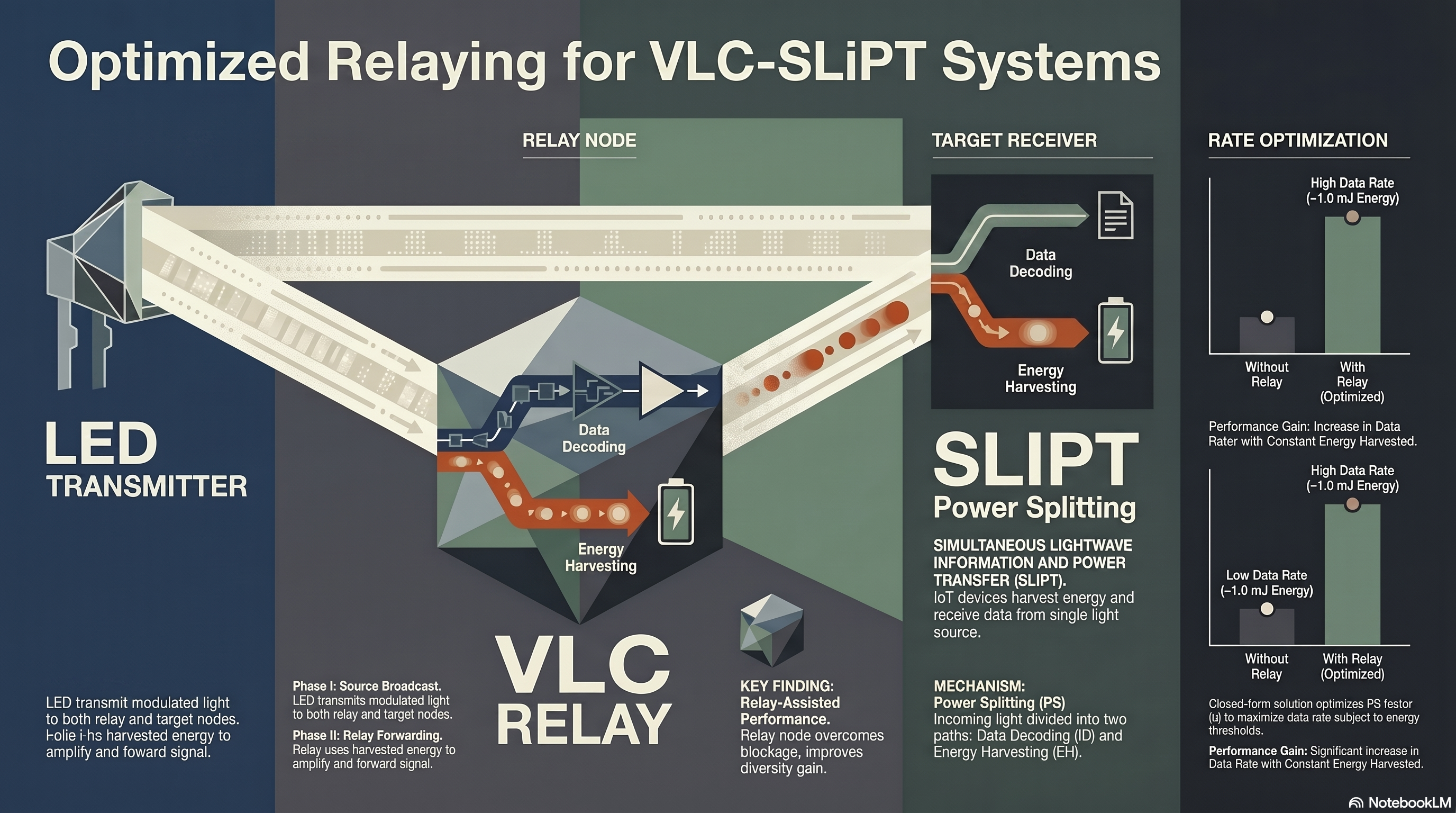 Rate Optimization for Relaying VLC System with Simultaneous Lightwave Information and Power TransferKuan Ye, Tengjiao Wang, and Fang YangOptics Express, 2021
In this paper, the rate optimization problem in a relaying visible light communication system with simultaneous lightwave information and power transfer (SLIPT) is investigated, where the power splitting (PS) transmission strategy is adopted. The expressions of the transmission rate and energy harvesting at the target node are derived, based on which, the rate maximization problem is formulated. Then, this problem is solved by optimizing the PS factor, and a closed-form solution is given. Numerical results reveal that the existence of the relay node improves the system performance.
@article{2021-oe, title = {Rate Optimization for Relaying VLC System with Simultaneous Lightwave Information and Power Transfer}, author = {Ye, Kuan and Wang, Tengjiao and Yang, Fang}, journal = {Optics Express}, volume = {29}, number = {2}, pages = {2184--2192}, year = {2021}, publisher = {Optical Society of America}, doi = {10.1364/OE.417634}, } - BMSB
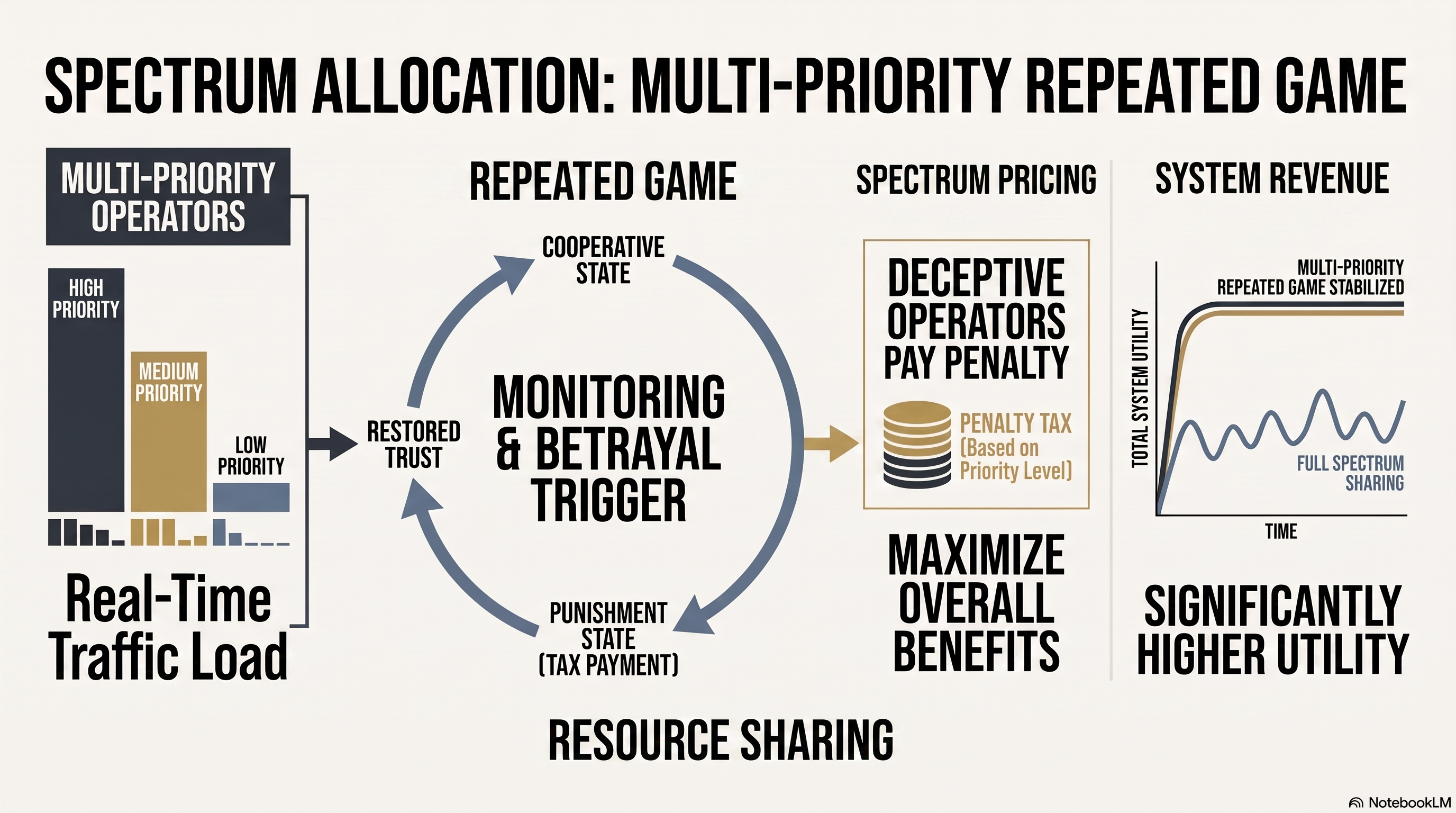 Spectrum Allocation of Multi-Priority Operators Based on Repeated Game for Future Mobile CommunicationCan Tang, Tengjiao Wang, Changyong Pan, Jian Song, Chao Zhang, and 1 more authorIn 2021 IEEE International Symposium on Broadband Multimedia Systems and Broadcasting (BMSB), 2021
In the new generation of mobile communication systems, the rapidly growing wireless data services require more open spectrum resources and smarter spectrum allocation schemes. At the same time, different kinds of services may require different levels of spectrum resources. In order to solve the above problems, a multi-priority operators’ model is proposed to solve the more complex spectrum allocation problem. By dividing the operators into multiple priority levels and price the spectrum, an infinitely repeated game model is built. Through simulation, the changes of press value over time when using different strategies for multiple operators are compared. The results show that the channel allocation strategy based on the multi-priority repeated game model performs better on system revenue than the noncooperative full-spectrum sharing strategy after stabilization.
@inproceedings{2021-bmsb-spectrum, title = {Spectrum Allocation of Multi-Priority Operators Based on Repeated Game for Future Mobile Communication}, author = {Tang, Can and Wang, Tengjiao and Pan, Changyong and Song, Jian and Zhang, Chao and Yang, Fang}, booktitle = {2021 IEEE International Symposium on Broadband Multimedia Systems and Broadcasting (BMSB)}, pages = {1--5}, year = {2021}, organization = {IEEE}, doi = {10.1109/BMSB53066.2021.9547075}, } - BMSB
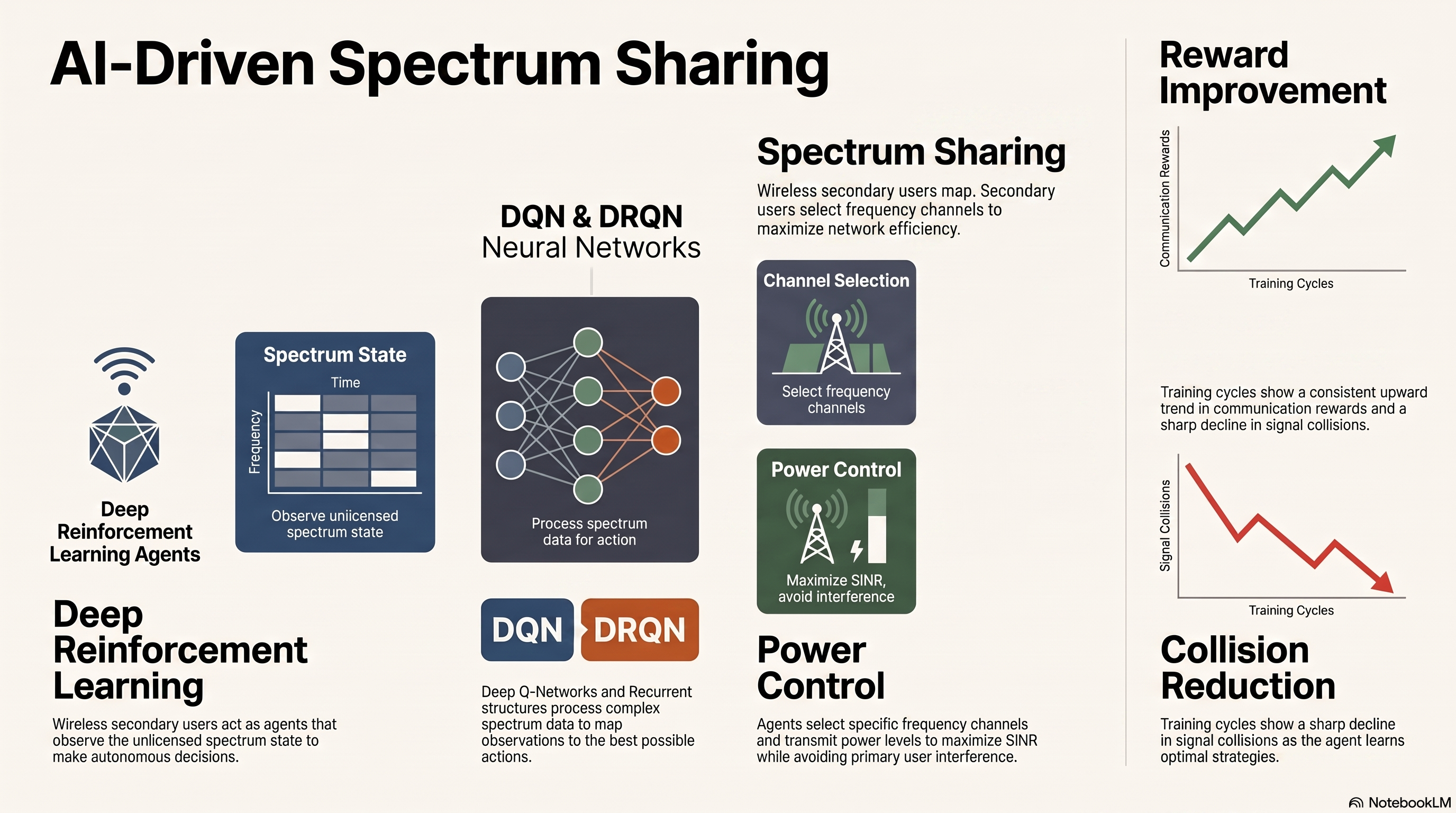 Deep Reinforcement Learning for Spectrum Sharing in Future Mobile Communication SystemSizhuang Liu, Tengjiao Wang, Changyong Pan, Chao Zhang, Fang Yang, and 1 more authorIn 2021 IEEE International Symposium on Broadband Multimedia Systems and Broadcasting (BMSB), 2021
In recent years, the rapid growth of mobile communication services makes spectrum resources become increasingly scarce. This paper considers the multi-dimensional resource allocation problem in unlicensed spectrum communication system. A training method based on deep reinforcement learning is proposed to generate a spectrum sharing and power control strategy for secondary users in the communication system. Deep Q-Network and Deep Recurrent Q-Network are chosen as the structure of neural network. Experiments are conducted to investigate the effectiveness of the algorithm. The results show that collision rate decreases in training while average reward rises.
@inproceedings{2021-bmsb-deep,
  title = {Deep Reinforcement Learning for Spectrum Sharing in Future Mobile Communication System},
  author = {Liu, Sizhuang and Wang, Tengjiao and Pan, Changyong and Zhang, Chao and Yang, Fang and Song, Jian},
  booktitle = {2021 IEEE International Symposium on Broadband Multimedia Systems and Broadcasting (BMSB)},
  pages = {1--5},
  year = {2021},
  organization = {IEEE},
  doi = {10.1109/BMSB53066.2021.9547161},
}
2020
- WCM
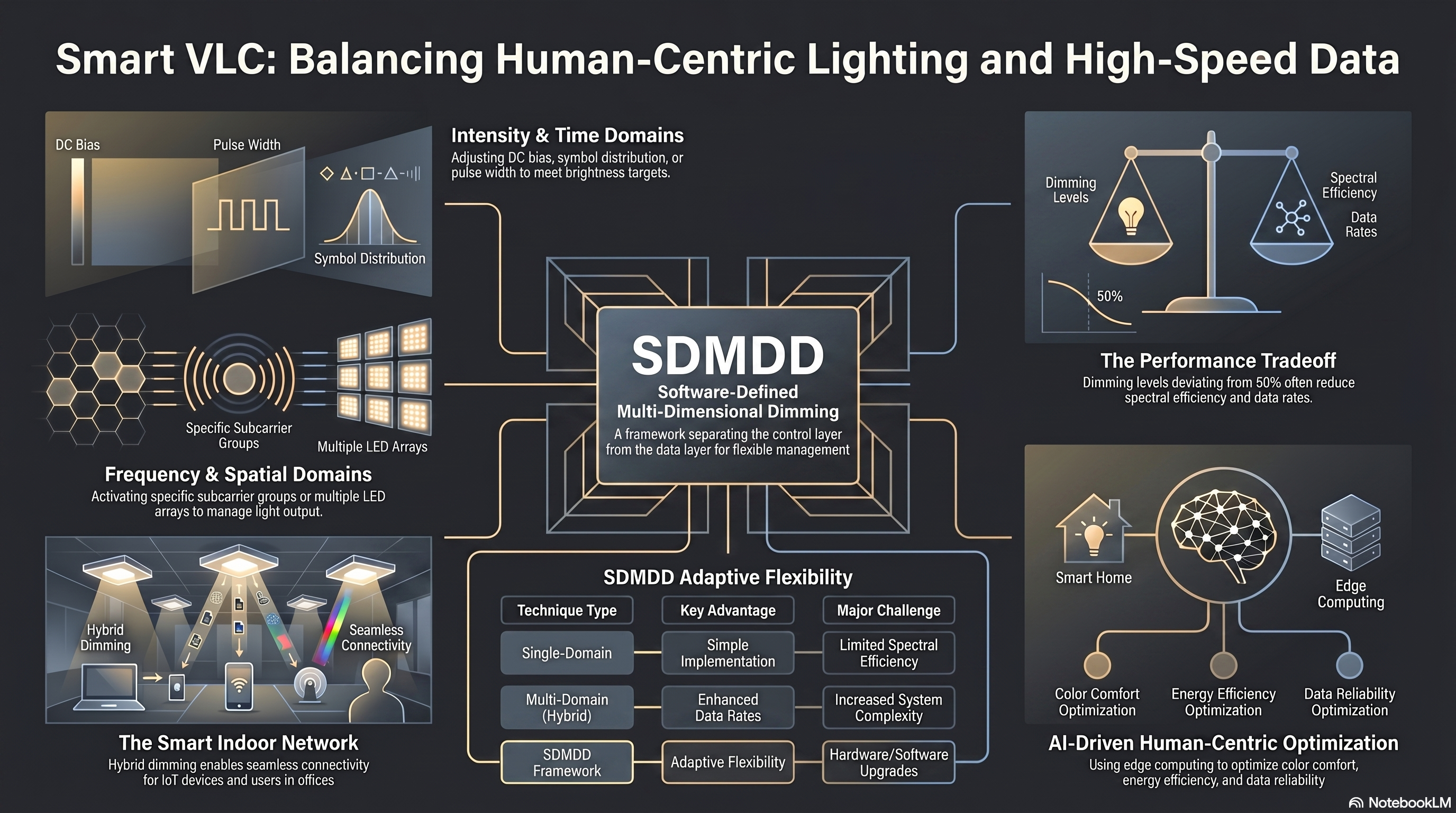 Dimming Techniques of Visible Light Communications for Human-Centric Illumination Networks: State-of-the-Art, Challenges, and TrendsTengjiao Wang, Fang Yang, Jian Song, and Zhu HanIEEE Wireless Communications, 2020
Visible light communication (VLC), which utilizes the ubiquitous illumination network to implement high-speed communication, is rapidly emerging as one promising candidate to complement conventional radio frequency communication. In practical VLC systems, the illumination network is required to be human-centric to provide adjustable lighting for different user requirements, which limits the resource utilization of the communication aspect. Dimming control techniques, which provide compromise resource management solutions between illumination and communication, are critically essential in the implementation and commercialization of VLC. In this article, state-of-the-art dimming techniques for VLC are illustrated from a multi-dimensional perspective, including the intensity domain, the time domain, the frequency domain, and the spatial domain. We provide a comprehensive comparison of these techniques on their principles, key features, system performance, and so on. In addition, the challenges and the future research trends are presented to provide researchers with insights of future improvements and prospect of advancement in the field. Moreover, the concept of the software defined multi-dimensional dimming is also proposed for the human-centric illumination network by utilizing multi-dimensional resources according to the diversified system requirements.
@article{2020-wcm, title = {Dimming Techniques of Visible Light Communications for Human-Centric Illumination Networks: State-of-the-Art, Challenges, and Trends}, author = {Wang, Tengjiao and Yang, Fang and Song, Jian and Han, Zhu}, journal = {IEEE Wireless Communications}, volume = {27}, number = {4}, pages = {88--95}, year = {2020}, publisher = {IEEE}, selected = true, doi = {10.1109/MWC.001.1900388}, } - WCL
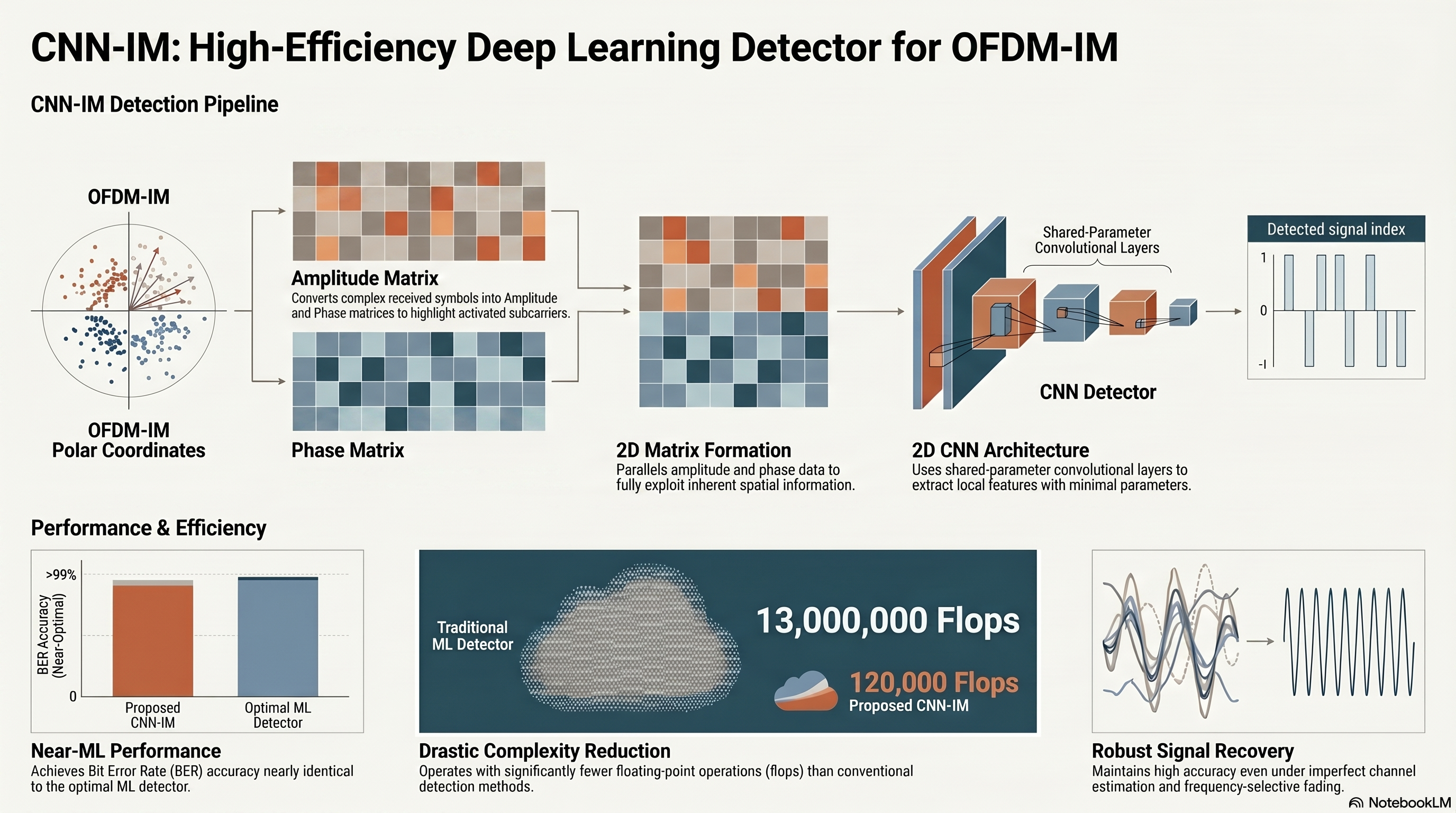 Deep Convolutional Neural Network-Based Detector for Index ModulationTengjiao Wang, Fang Yang, Jian Song, and Zhu HanIEEE Wireless Communications Letters, 2020
In this letter, a convolutional neural network-based detection framework is proposed for the wireless communication systems using orthogonal frequency-division multiplexing with index modulation (OFDM-IM). In the proposed framework, the received symbols are transformed to polar coordinates to help the neural network detect the indices of the activated subcarriers. We parallel the amplitude and the phase of the received symbols to form 2-dimensional matrices and use 2-dimensional convolutional layers to fully exploit the inherent information in the OFDM-IM symbols. After offline training, the proposed detector can be employed to implement online detection of the OFDM-IM symbols. Simulation results demonstrate that the proposed detector is capable of achieving near maximum likelihood detection performance with much lower complexity.
@article{2020-wcl, title = {Deep Convolutional Neural Network-Based Detector for Index Modulation}, author = {Wang, Tengjiao and Yang, Fang and Song, Jian and Han, Zhu}, journal = {IEEE Wireless Communications Letters}, volume = {9}, number = {10}, pages = {1705--1709}, year = {2020}, publisher = {IEEE}, selected = true, doi = {10.1109/LWC.2020.3001731}, } - OE
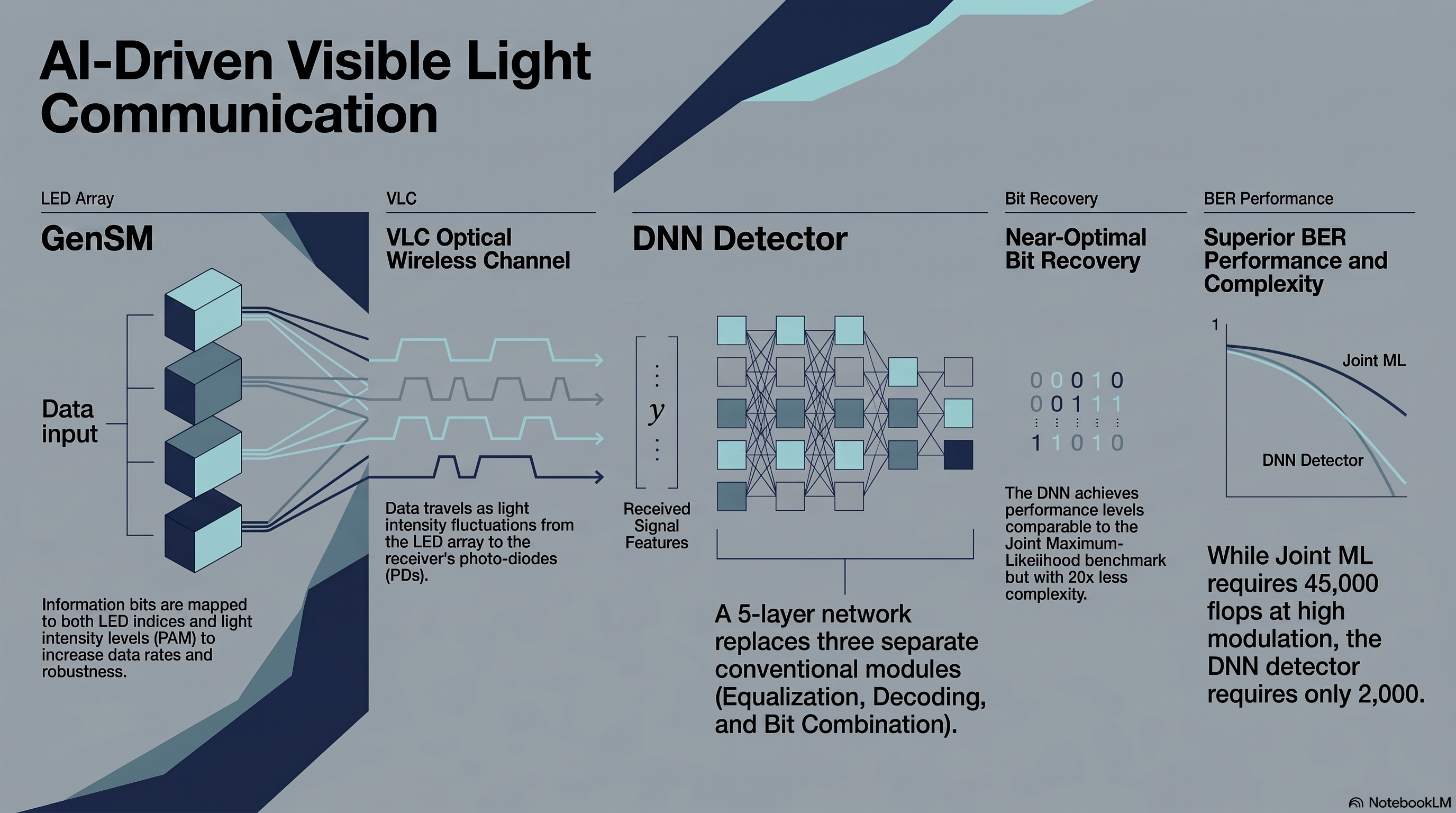 Deep Learning-Based Detection Scheme for Visible Light Communication with Generalized Spatial ModulationTengjiao Wang, Fang Yang, and Jian SongOptics Express, 2020
In this paper, a deep learning-based detection scheme is proposed for the visible light communication (VLC) systems using generalized spatial modulation (GenSM). In the proposed detection scheme, a deep neural network consisting of several neural layers is applied to detect the received signals. By integrating the signal processing modules of the conventional detection schemes into one deep neural network, the proposed scheme is able to extract the information bits from the received signals efficiently. After offline training, the proposed detection scheme can serve as a promising detection method for the VLC system with GenSM. Simulation results validate that the proposed detection scheme is capable of achieving superior detection error performance than conventional detection schemes at acceptable complexity.
@article{2020-oe, title = {Deep Learning-Based Detection Scheme for Visible Light Communication with Generalized Spatial Modulation}, author = {Wang, Tengjiao and Yang, Fang and Song, Jian}, journal = {Optics Express}, volume = {28}, number = {20}, pages = {28906--28915}, year = {2020}, publisher = {Optical Society of America}, doi = {10.1364/OE.404463}, } - ICC
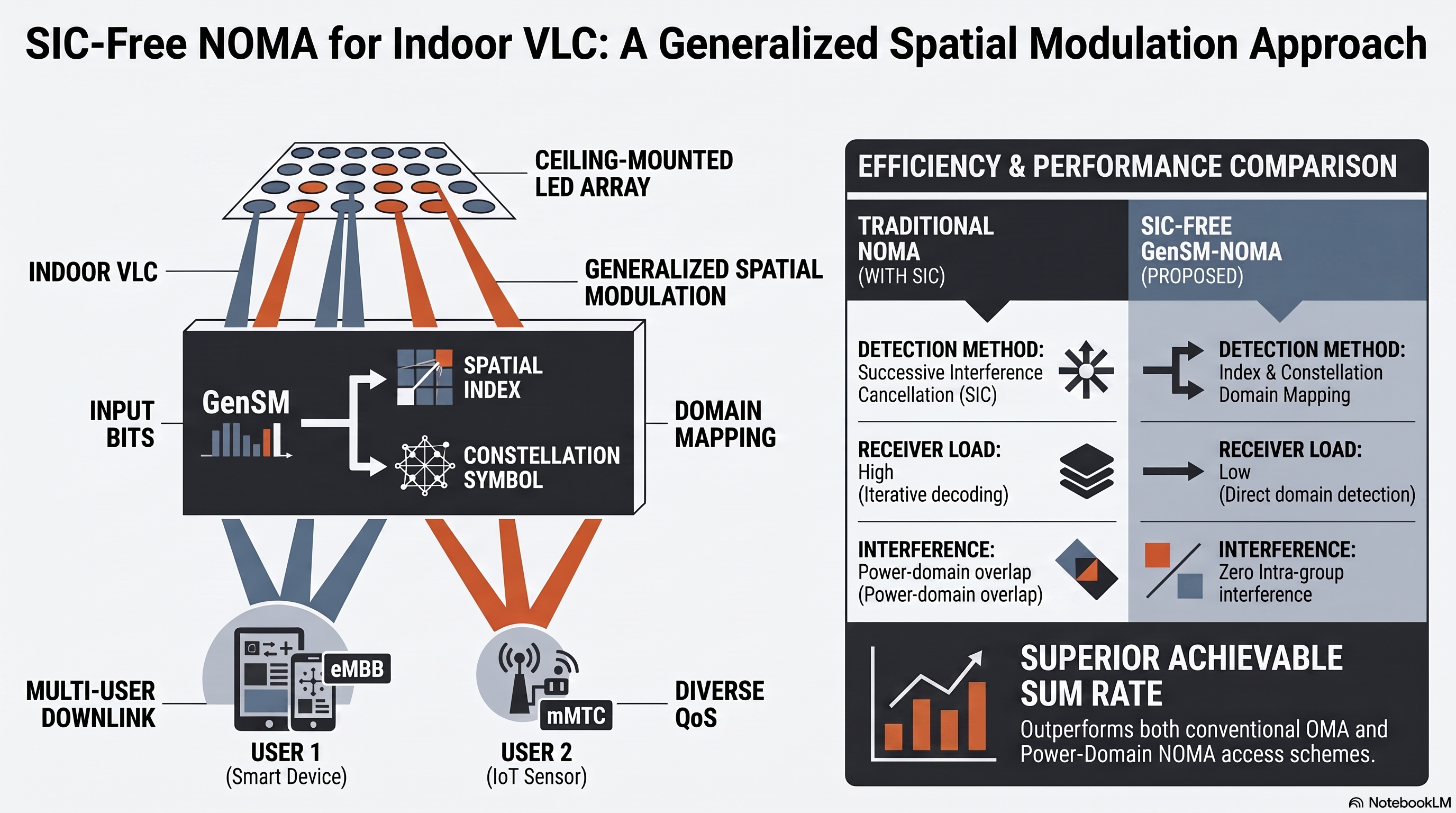 Successive-Interference-Cancellation-Free NOMA for Indoor VLC: A Generalized Spatial Modulation Based ApproachTengjiao Wang, Fang Yang, Changyong Pan, Jian Song, and Zhu HanIn 2020 IEEE International Conference on Communications Workshops (ICC Workshops), 2020
Recently, visible light communication (VLC) has been regarded as one promising candidate to complement the conventional radio frequency communication in the future communication systems. In this paper, a novel successive-interference-cancellation-free non-orthogonal multiple access (NOMA) scheme is proposed for indoor VLC systems, based on the generalized spatial modulation technique. Different from the conventional NOMA schemes, information bits for users with diverse quality of service requirements are conveyed through different domains of the transmitted signals. Therefore, the intra-group interference among users is canceled and the successive interference cancellation is avoided to reduce the computational complexity at the receiver side. Theoretical analysis and simulation results are further provided to validate the superior performance of the proposed scheme over conventional orthogonal and non-orthogonal multiple access schemes.
@inproceedings{2020-icc,
  title = {Successive-Interference-Cancellation-Free NOMA for Indoor VLC: A Generalized Spatial Modulation Based Approach},
  author = {Wang, Tengjiao and Yang, Fang and Pan, Changyong and Song, Jian and Han, Zhu},
  booktitle = {2020 IEEE International Conference on Communications Workshops (ICC Workshops)},
  pages = {1--6},
  year = {2020},
  organization = {IEEE},
  doi = {10.1109/ICCWorkshops49005.2020.9145385},
}
2019
- JLT
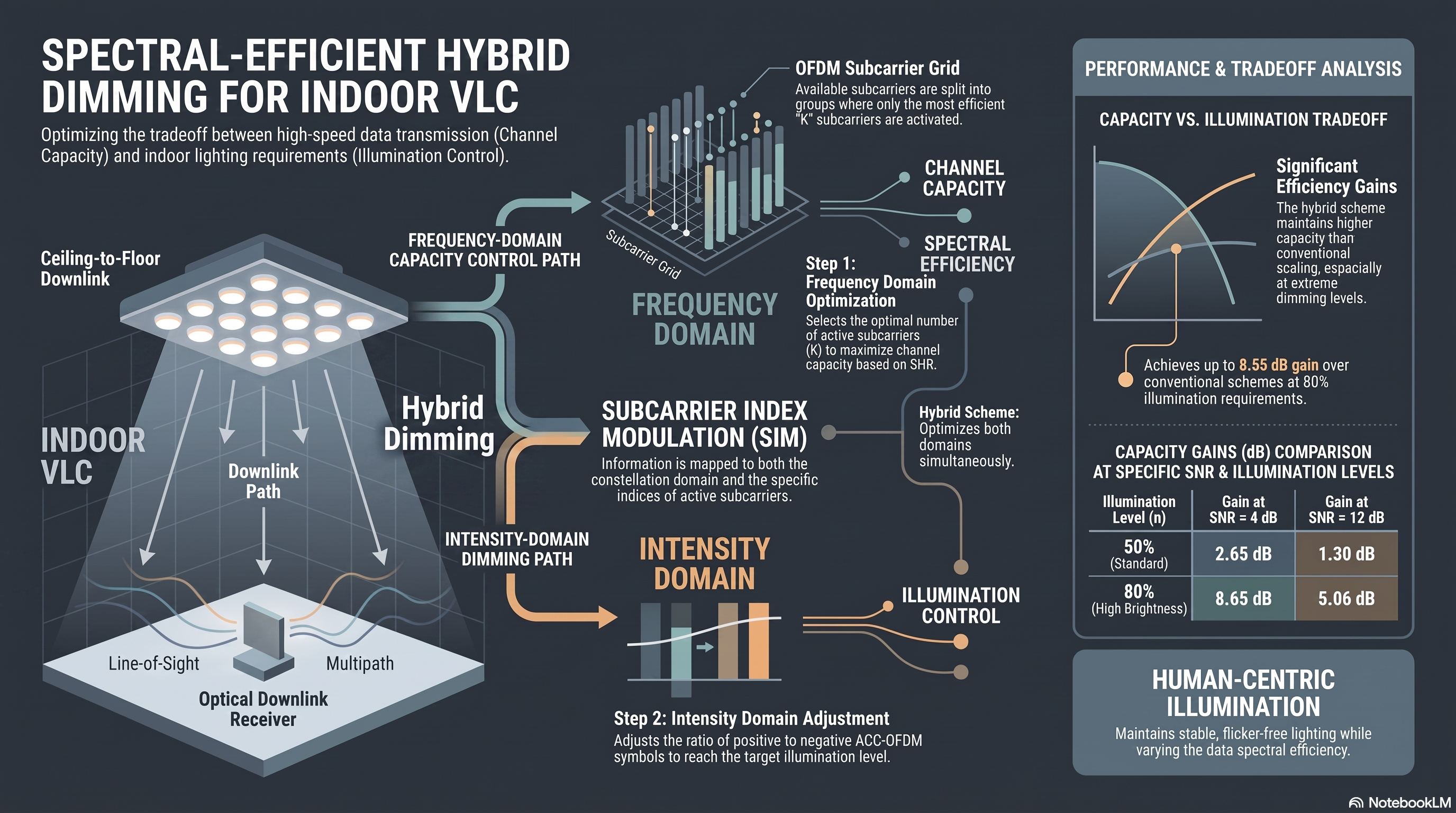 Spectral-Efficient Hybrid Dimming Scheme for Indoor Visible Light Communication: A Subcarrier Index Modulation Based ApproachTengjiao Wang, Fang Yang, Changyong Pan, Ling Cheng, and Jian SongJournal of Lightwave Technology, 2019
Communication and illumination are two basic functions of the indoor visible light communication (VLC). In this paper, a novel spectral-efficient hybrid dimming scheme is proposed for the indoor VLC system, where the frequency-domain subcarrier selection is utilized to maximize the channel capacity and the intensity-domain dimming strategy is used to further adjust the illumination level. Simulations are carried out in both the indoor line-of-sight channel and the indoor multipath channel. Simulation results substantiate the superior performance of the proposed hybrid dimming scheme over the state-of-the-art schemes.
@article{2019-jlt, title = {Spectral-Efficient Hybrid Dimming Scheme for Indoor Visible Light Communication: A Subcarrier Index Modulation Based Approach}, author = {Wang, Tengjiao and Yang, Fang and Pan, Changyong and Cheng, Ling and Song, Jian}, journal = {Journal of Lightwave Technology}, volume = {37}, number = {23}, pages = {5756--5765}, year = {2019}, publisher = {OSA}, doi = {10.1109/JLT.2019.2938237}, } - ICC
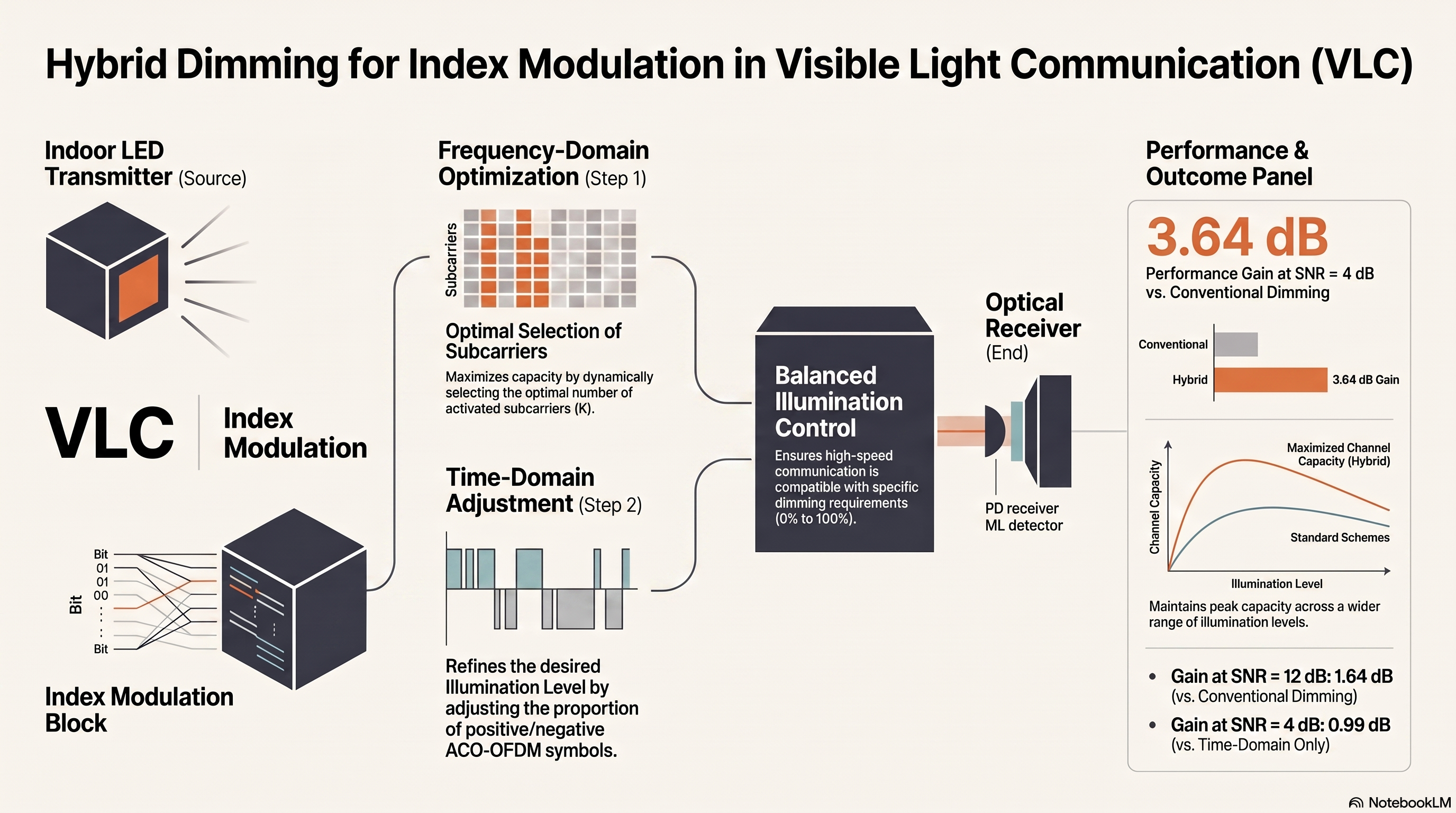 Index Modulation Based Hybrid Dimming Scheme for Visible Light CommunicationTengjiao Wang, Fang Yang, Changyong Pan, Ling Cheng, and Jian SongIn 2019 IEEE International Conference on Communications (ICC), 2019
Recently, the index modulation technique is introduced into the visible light communication (VLC) system to convey information bits in a more energy-efficient and spectral-efficient way. However, in practice, the index modulation aided VLC system should be carefully designed to be compatible with dimming control. In this paper, a novel hybrid dimming scheme is proposed for the index modulation aided VLC system, which combines the frequency-domain and time-domain dimming strategies to maximize the channel capacity and maintain the desired illumination level. Simulation results validate the superior performance of the proposed hybrid dimming scheme.
@inproceedings{2019-icc, title = {Index Modulation Based Hybrid Dimming Scheme for Visible Light Communication}, author = {Wang, Tengjiao and Yang, Fang and Pan, Changyong and Cheng, Ling and Song, Jian}, booktitle = {2019 IEEE International Conference on Communications (ICC)}, pages = {1--6}, year = {2019}, organization = {IEEE}, doi = {10.1109/ICC.2019.8762056}, } - GLOBECOM
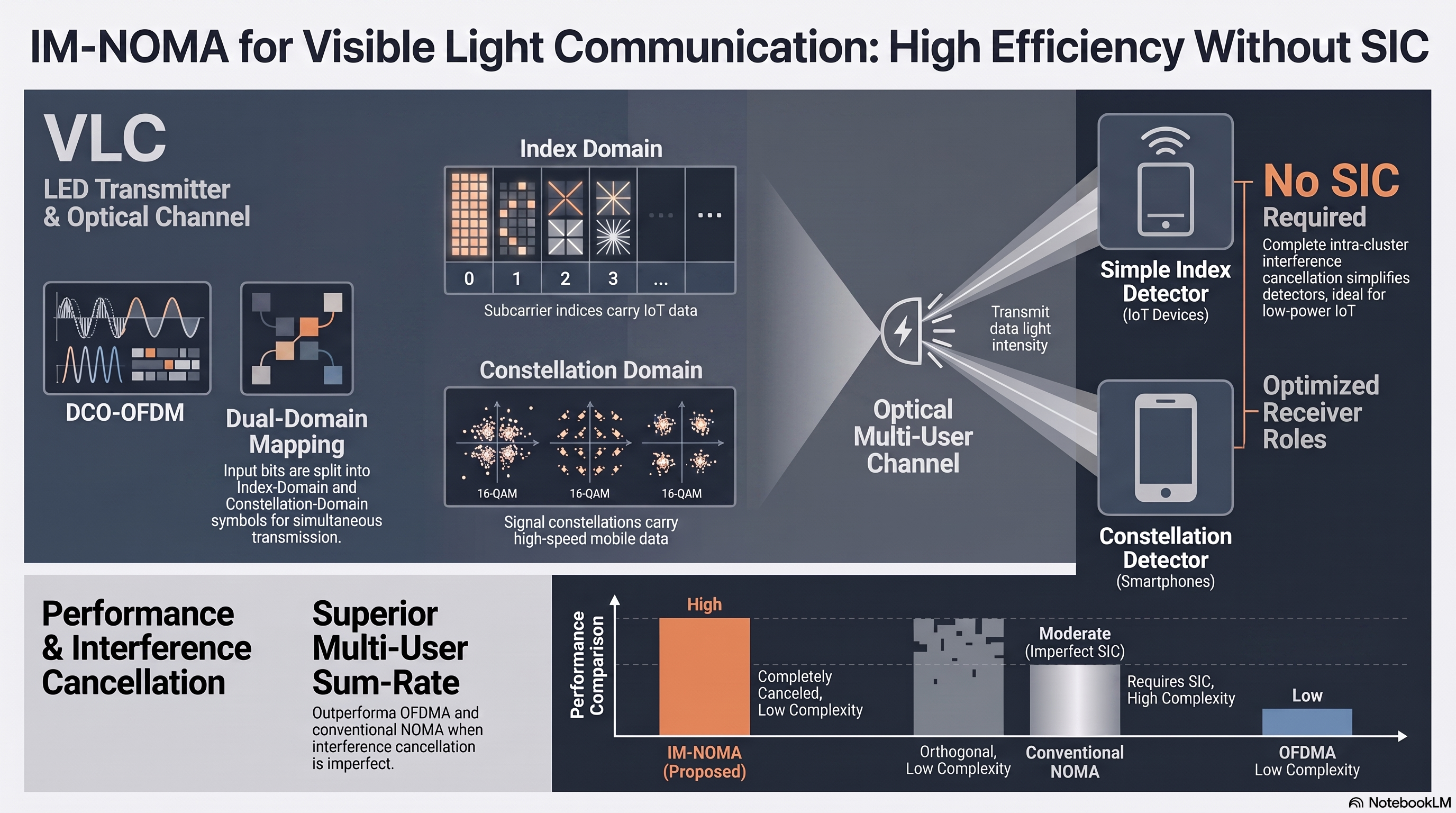 Novel Index Modulation Aided Non-Orthogonal Multiple Access for Visible Light CommunicationTengjiao Wang, Fang Yang, and Jian SongIn 2019 IEEE Global Communications Conference (GLOBECOM), 2019
In this paper, a novel index modulation aided non-orthogonal multiple access (NOMA) scheme is proposed for visible light communication (VLC). Unlike the conventional NOMA schemes, the proposed scheme conveys information for different users through both the index-domain and constellation-domain symbols with the aid of index modulation, which is able to cancel the intra-cluster interference completely and avoid the use of successive interference cancellation to decrease computational complexity. The achievable multi-user sum rate of the proposed scheme is analyzed and a closed-form expression of the lower bound is derived. Then, an approximation is further obtained to realize accurate prediction of the achievable multi-user sum rate. Simulation results validate the accuracy of the approximation of the achievable sum rate and the superior performance of the proposed scheme.
@inproceedings{2019-globecom,
  title = {Novel Index Modulation Aided Non-Orthogonal Multiple Access for Visible Light Communication},
  author = {Wang, Tengjiao and Yang, Fang and Song, Jian},
  booktitle = {2019 IEEE Global Communications Conference (GLOBECOM)},
  pages = {1--6},
  year = {2019},
  organization = {IEEE},
  doi = {10.1109/GLOBECOM38437.2019.9013600},
}
2018
- IoTJ
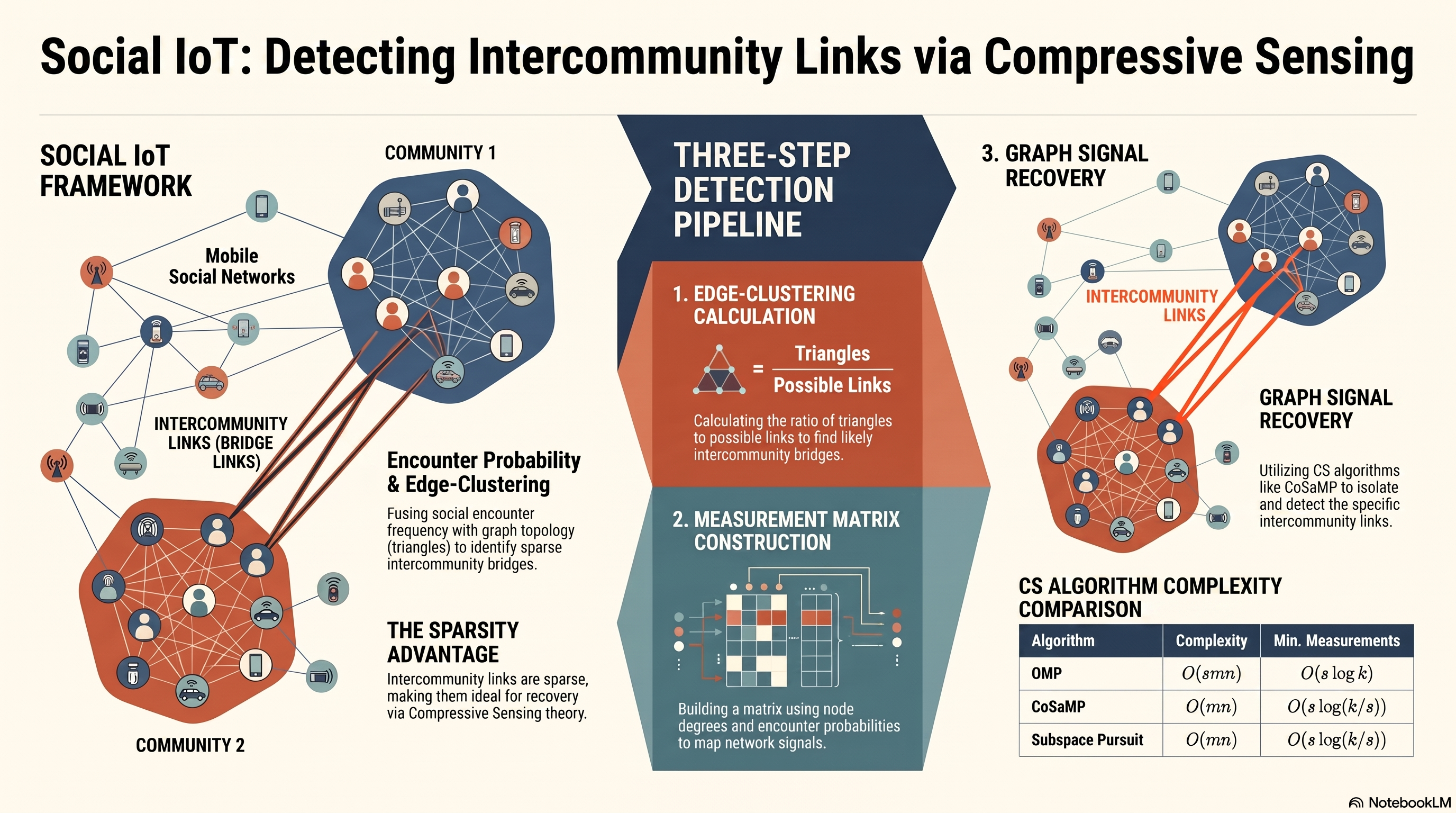 Intercommunity Detection Scheme for Social Internet of Things: Compressive Sensing over Graphs ApproachTengjiao Wang, Jingbo Tan, Wenbo Ding, Yanru Zhang, Fang Yang, and 2 more authorsIEEE Internet of Things Journal, 2018
As a cluster between Internet of Things (IoT) and mobile social networks (MSNs), social IoT allows close interaction between humans and things. Many applications of IoT and MSN are based on the community structure to realize efficient services, and thus the detection of the community structure has become a key problem and attracted much academic attention. In this paper, a compressive sensing (CS) over graphs-based intercommunity detection scheme is proposed for the social IoT. By exploiting the probability of two nodes encountering each other, the encounter probability and the edge-clustering coefficient are utilized to define a novel metric for each connection and construct the measurement matrix. Then a CS-based detection algorithm is proposed to detect the intercommunity links. Moreover, the edge-clustering coefficient is exploited as the prior information to further improve accuracy and reduce complexity. Simulations show that the proposed detection scheme outperforms the conventional random walk-based scheme in the social IoT.
@article{2018-iotj, title = {Intercommunity Detection Scheme for Social Internet of Things: Compressive Sensing over Graphs Approach}, author = {Wang, Tengjiao and Tan, Jingbo and Ding, Wenbo and Zhang, Yanru and Yang, Fang and Song, Jian and Han, Zhu}, journal = {IEEE Internet of Things Journal}, volume = {5}, number = {6}, pages = {4550--4557}, year = {2018}, doi = {10.1109/JIOT.2018.2837048}, publisher = {IEEE}, } - TBC
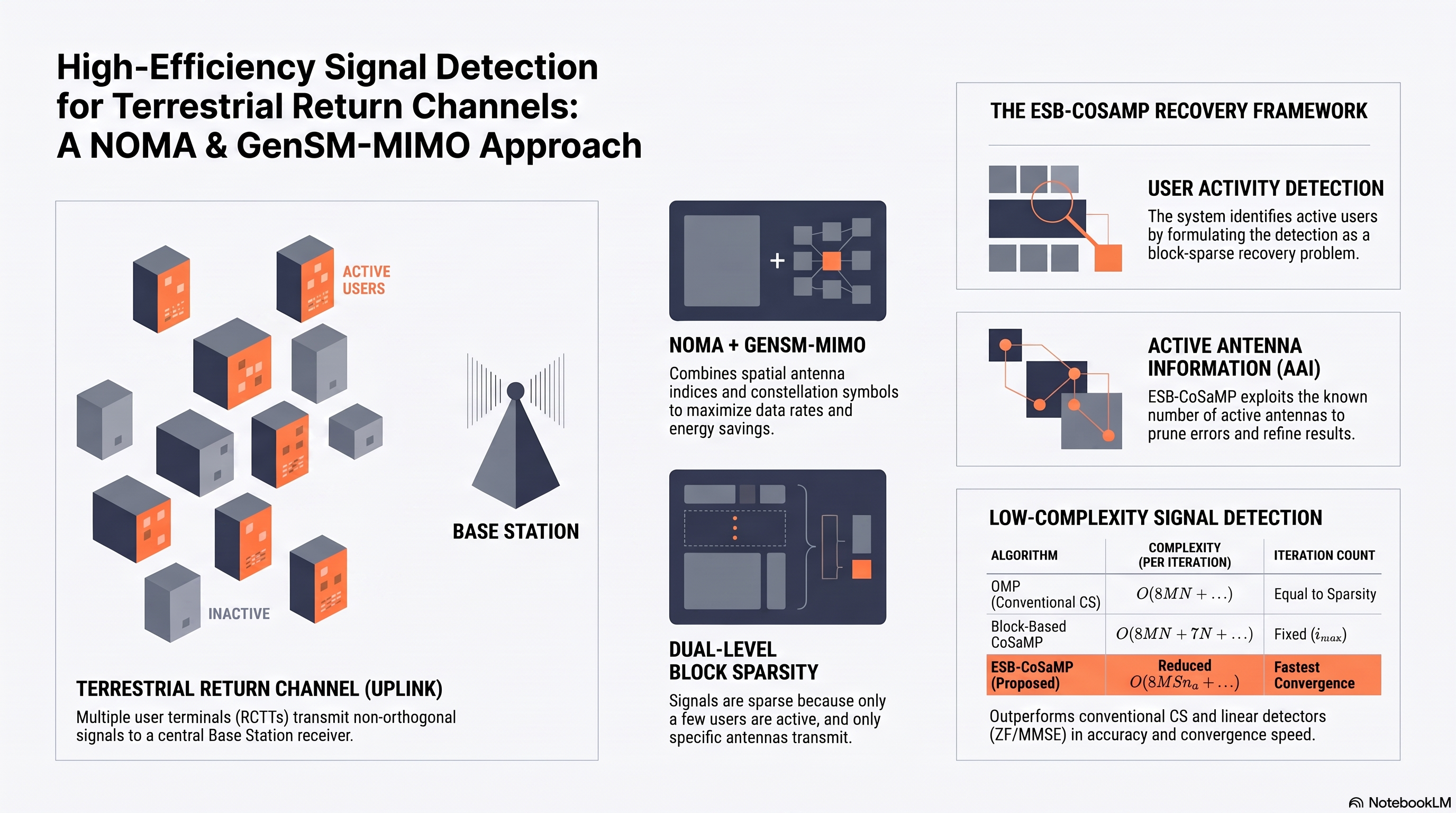 Generalized Spatial Modulation-Based Multi-User and Signal Detection Scheme for Terrestrial Return Channel with NOMATengjiao Wang, Sicong Liu, Fang Yang, Jintao Wang, Jian Song, and 1 more authorIEEE Transactions on Broadcasting, 2018
The terrestrial return channel provides interactive services in digital television terrestrial broadcasting systems to meet various consumers’ demands around the world. The extension of non-orthogonal multiple access and generalized spatial modulation multiple-input multiple-output to the terrestrial return channel improves both the spectral and energy efficiencies of the system, but it puts forward detection challenges. In this paper, a joint user activity and signal detection scheme based on the block-sparse compressive sensing (BS-CS) method in the terrestrial return channel is proposed, in which the generalized spatial modulation technology is used. By exploiting the structure and sparsity of the multi-user generalized spatial modulation signal, we formulate the detection problem into a block-sparse recovery problem. Then a BS-CS-based detection algorithm, enhanced structured block-sparse compressive sampling matching pursuit (ESB-CoSaMP), is proposed to detect the active users and transmitted data efficiently. Moreover, the information of active antennas at each user is exploited in ESB-CoSaMP to further improve the accuracy. Simulations show that the proposed detection scheme outperforms the conventional CS and BS-CS-based schemes.
@article{2018-tbc, title = {Generalized Spatial Modulation-Based Multi-User and Signal Detection Scheme for Terrestrial Return Channel with NOMA}, author = {Wang, Tengjiao and Liu, Sicong and Yang, Fang and Wang, Jintao and Song, Jian and Han, Zhu}, journal = {IEEE Transactions on Broadcasting}, volume = {64}, number = {2}, pages = {211--219}, year = {2018}, doi = {10.1109/TBC.2017.2755260}, publisher = {IEEE}, } - ACCESS
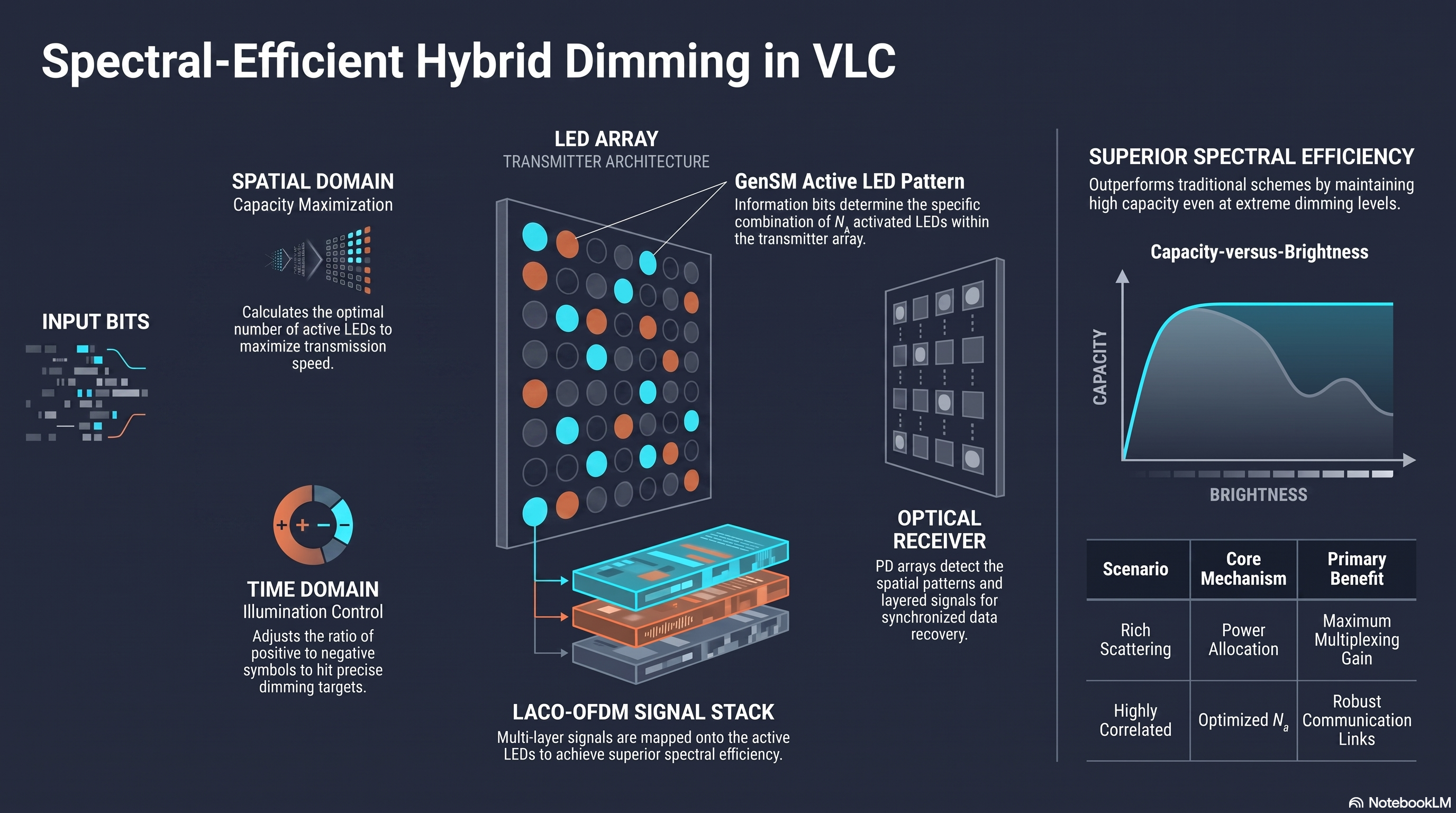 Spectral-Efficient Generalized Spatial Modulation Based Hybrid Dimming Scheme with LACO-OFDM in VLCTengjiao Wang, Fang Yang, Ling Cheng, and Jian SongIEEE Access, 2018
Visible light communication (VLC) is regarded as one of the promising candidates to complement the conventional radio frequency communication as it can potentially perform communication and illumination simultaneously. Recently, VLC is combined with the generalized spatial modulation (GenSM) technology to improve spectral and energy efficiencies. In order to provide high-speed communication and flexible dimming control simultaneously, in this paper, a spectral-efficient GenSM-based hybrid dimming scheme with layered asymmetrically clipped optical OFDM is proposed for VLC, which combines the spatial-domain and time-domain dimming strategies. The channel capacities of the proposed scheme are analyzed and the closed-form expressions of the channel capacity are derived in both the rich scattering scenario and highly correlated scenario. According to the required illumination level, the spatial-domain and time-domain strategies are realized based on the maximization of the channel capacity. Simulation results substantiate the superior performance of the proposed dimming scheme over the state-of-art dimming schemes.
@article{2018-access, title = {Spectral-Efficient Generalized Spatial Modulation Based Hybrid Dimming Scheme with LACO-OFDM in VLC}, author = {Wang, Tengjiao and Yang, Fang and Cheng, Ling and Song, Jian}, journal = {IEEE Access}, volume = {6}, pages = {41153--41162}, year = {2018}, publisher = {IEEE}, doi = {10.1109/ACCESS.2018.2851076}, } - ICC
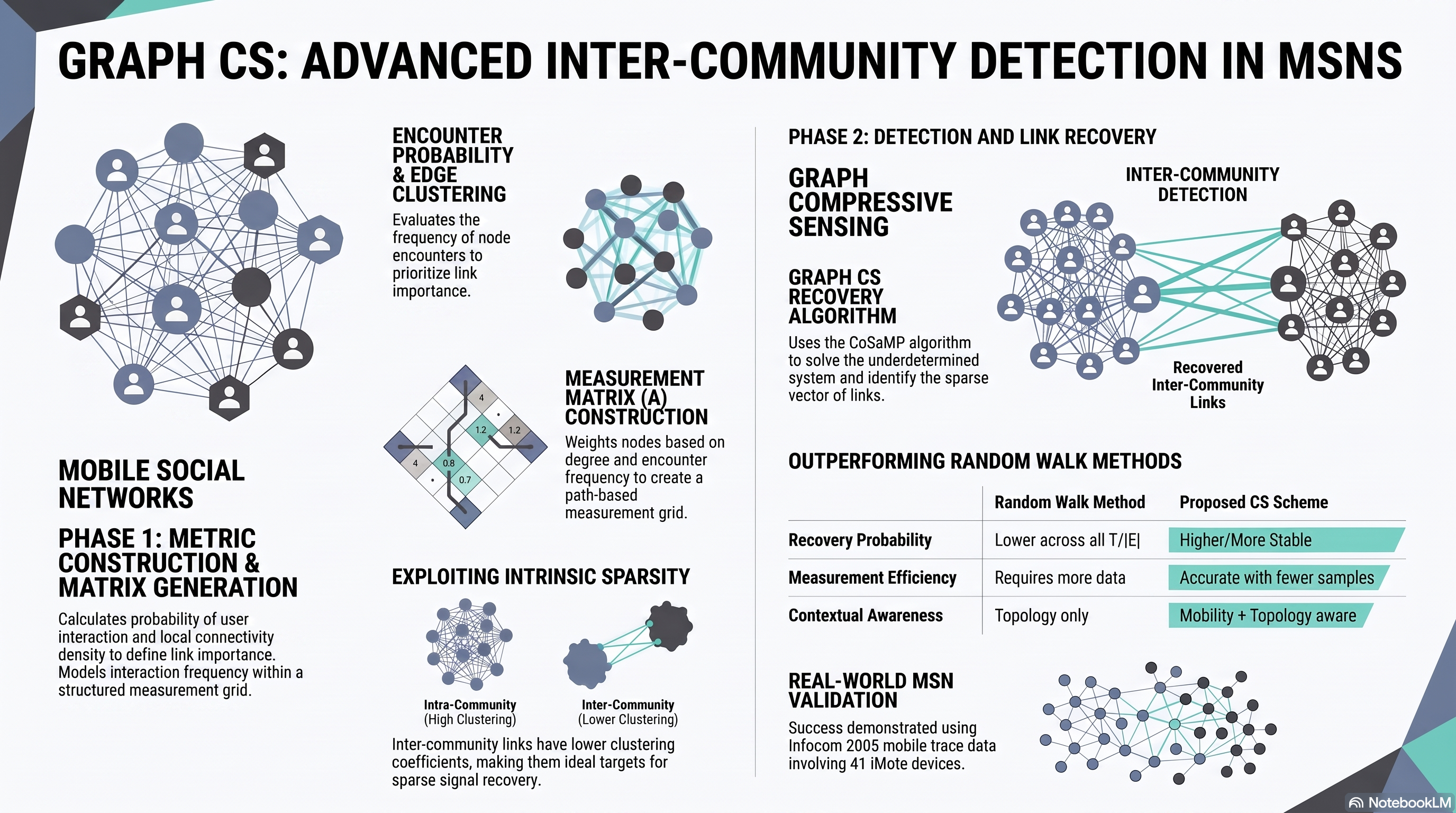 Compressive Sensing over Graphs Based Inter-Community Detection Scheme in Mobile Social NetworksTengjiao Wang, Jingbo Tan, Wenbo Ding, Yanru Zhang, Fang Yang, and 2 more authorsIn 2018 IEEE International Conference on Communications (ICC), 2018
Recently, mobile social networks (MSNs) has been playing an increasingly large proportion in people’s daily life, and consequently attracted enormous amount of researches in this area, including network data collection, user behavior analysis and so on. Many of them are based on the community structure of the MSNs, the detection of which has attracted academic attention. In this paper, we propose an inter-community detection scheme under the framework of the emerging compressive sensing (CS) over graphs. Firstly, we extract the social structure among users by calculating the probability of two users encountering with each other. Then, the proposed scheme utilizes the encounter probability and the edge-clustering coefficient to define a novel additive property to make the CS algorithm applicable. Simulation results demonstrate that the proposed detection scheme can detect inter- community links more accurately than the conventional random walk based method.
@inproceedings{2018-icc, title = {Compressive Sensing over Graphs Based Inter-Community Detection Scheme in Mobile Social Networks}, author = {Wang, Tengjiao and Tan, Jingbo and Ding, Wenbo and Zhang, Yanru and Yang, Fang and Song, Jian and Han, Zhu}, booktitle = {2018 IEEE International Conference on Communications (ICC)}, pages = {1--6}, year = {2018}, organization = {IEEE}, doi = {10.1109/ICC.2018.8422247}, } - GLOBECOM
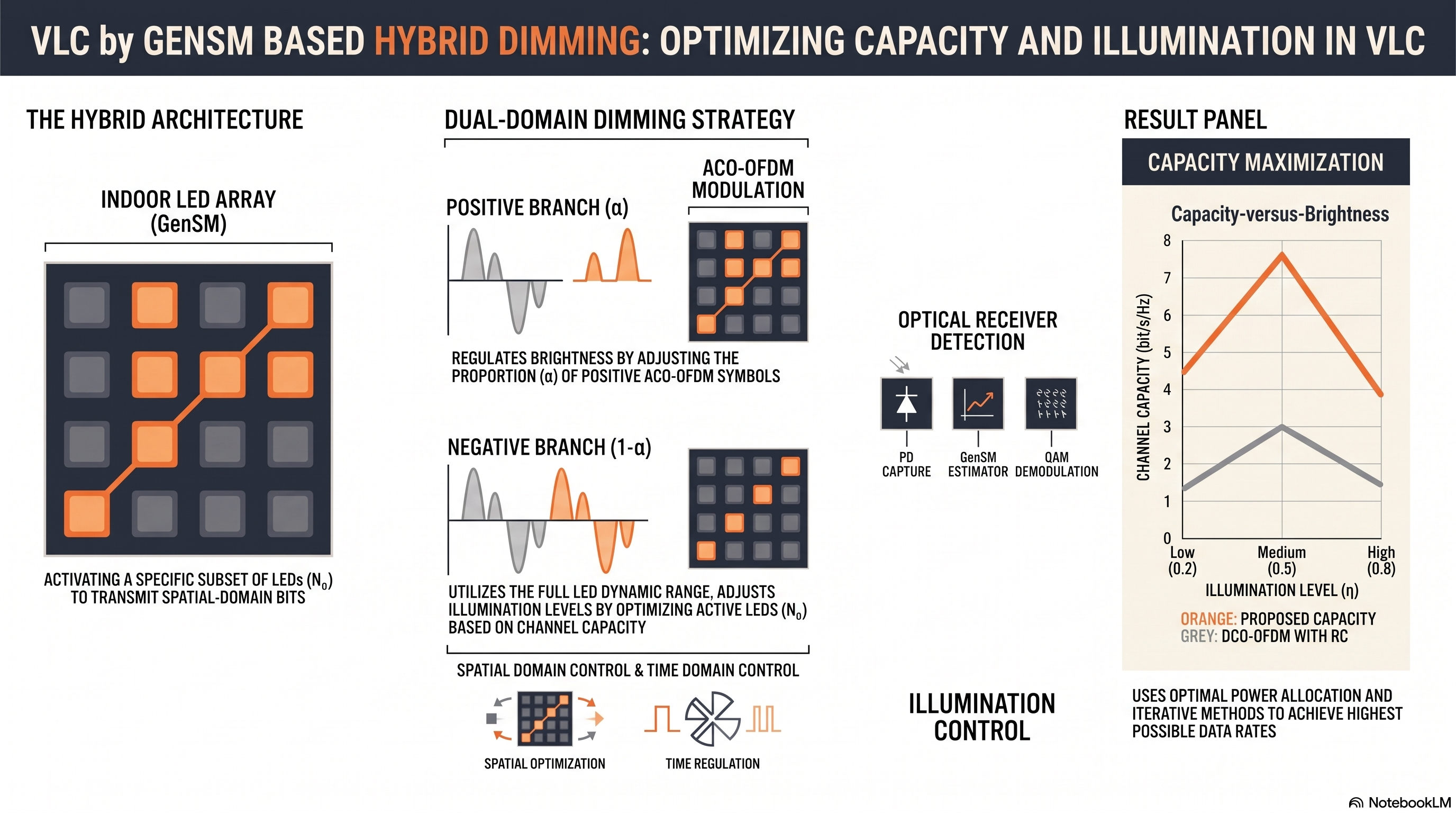 Generalized Spatial Modulation Based Hybrid Dimming Scheme for Visible Light CommunicationTengjiao Wang, Fang Yang, Ling Cheng, and Jian SongIn 2018 IEEE Global Communications Conference (GLOBECOM), 2018
Visible light communication (VLC) is regarded as one of the promising candidate to complement the conventional radio frequency communication as it can potentially perform communication and illumination simultaneously. Recently, VLC is combined with generalized spatial modulation (GenSM) technology to improve spectral and energy efficiencies. In order to provide high speed communication and flexible dimming control simultaneously, in this paper, a spectral-efficient GenSM based hybrid dimming scheme, which combines the spatial-domain and time- domain dimming strategies, is proposed for VLC. The channel capacity of the proposed scheme is analyzed and a closed-form expression of the upper bound of the channel capacity is derived. According to the required illumination level, the spatial-domain and time-domain strategies are realized based on the maximization of the channel capacity. Simulation results substantiate the superior performance of the proposed dimming scheme over state-of-art dimming schemes.
@inproceedings{2018-globecom,
  title = {Generalized Spatial Modulation Based Hybrid Dimming Scheme for Visible Light Communication},
  author = {Wang, Tengjiao and Yang, Fang and Cheng, Ling and Song, Jian},
  booktitle = {2018 IEEE Global Communications Conference (GLOBECOM)},
  pages = {1--6},
  year = {2018},
  organization = {IEEE},
  doi = {10.1109/GLOCOM.2018.8647623},
}
2017
- IWCMC
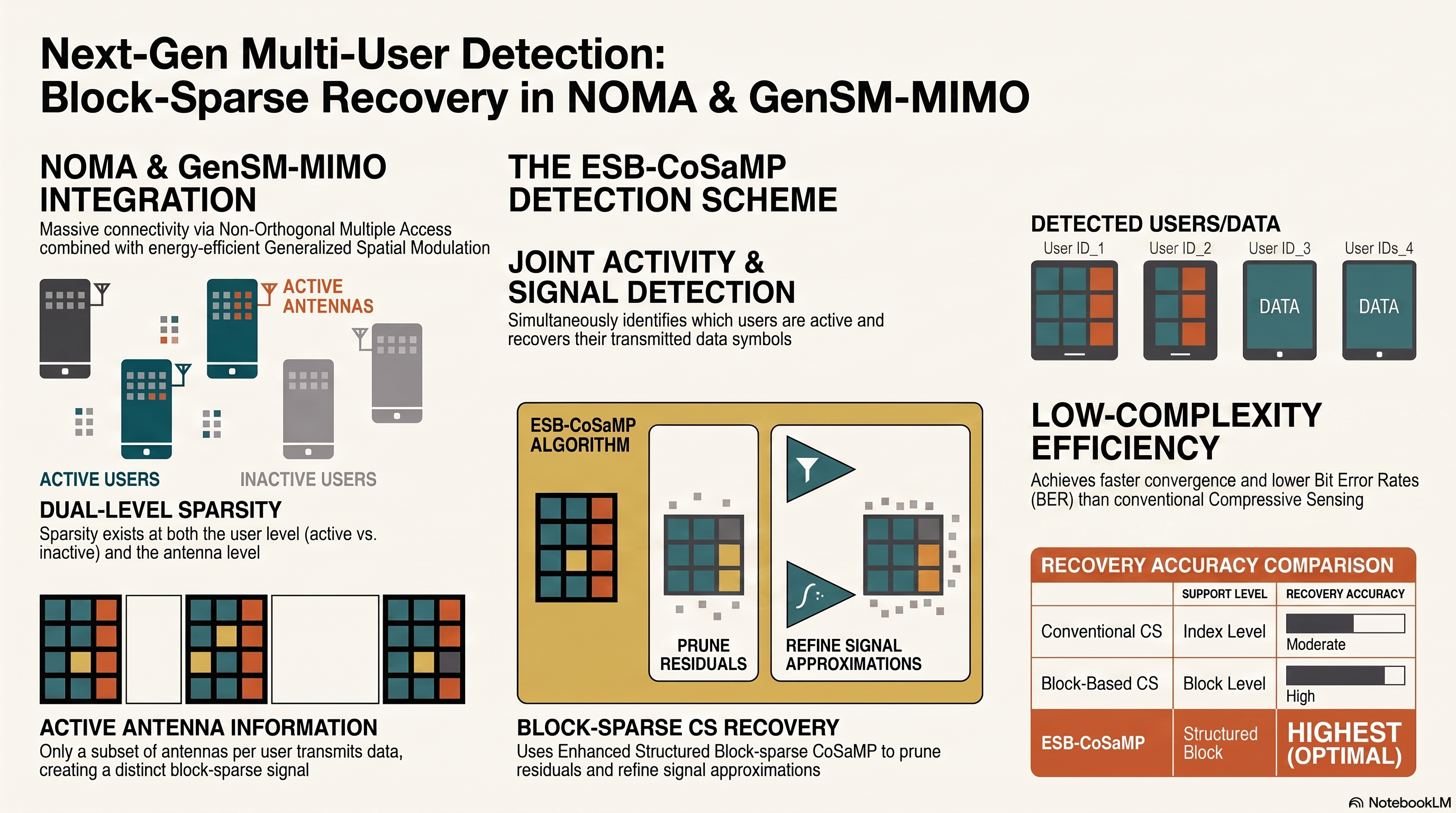 Block-Sparse Compressive Sensing Based Multi-User and Signal Detection for Generalized Spatial Modulation in NOMATengjiao Wang, Sicong Liu, Fang Yang, Jintao Wang, Jian Song, and 1 more authorIn 2017 13th International Wireless Communications and Mobile Computing Conference (IWCMC), 2017
The non-orthogonal multiple access (NOMA) technology has been proposed and regarded as one of the potential promising technologies for the future 5G network. The extension of generalized spatial modulation multiple-input multiple-output (MIMO) to NOMA system improves both the spectral and energy efficiencies of the system, while maintaining the massive connectivity and low latency advantages, but it puts forward challenges for the multi-user and signal detection as well. In this paper, we propose a joint user activity and signal detection scheme based on the block-sparse compressive sensing (BS-CS) method in the uplink NOMA system, in which the generalized spatial modulation MIMO technology is used. By exploiting the structure and sparsity of the multi-user generalized spatial modulation signals, we formulate the detection problem into a block-sparse recovery problem. Then a BS-CS based detection algorithm, enhanced structured block-sparse compressive sampling matching pursuit (ESB-CoSaMP), is proposed to detect the active users and transmitted data efficiently. Moreover, the information of active antennas at each user is exploited in ESB-CoSaMP to further improve the accuracy. Simulations show that the proposed detection scheme outperforms the conventional CS and BS-CS based schemes.
@inproceedings{2017-iwcmc, title = {Block-Sparse Compressive Sensing Based Multi-User and Signal Detection for Generalized Spatial Modulation in NOMA}, author = {Wang, Tengjiao and Liu, Sicong and Yang, Fang and Wang, Jintao and Song, Jian and Han, Zhu}, booktitle = {2017 13th International Wireless Communications and Mobile Computing Conference (IWCMC)}, pages = {1992--1997}, year = {2017}, organization = {IEEE}, doi = {10.1109/IWCMC.2017.7986589}, } - IWCMC
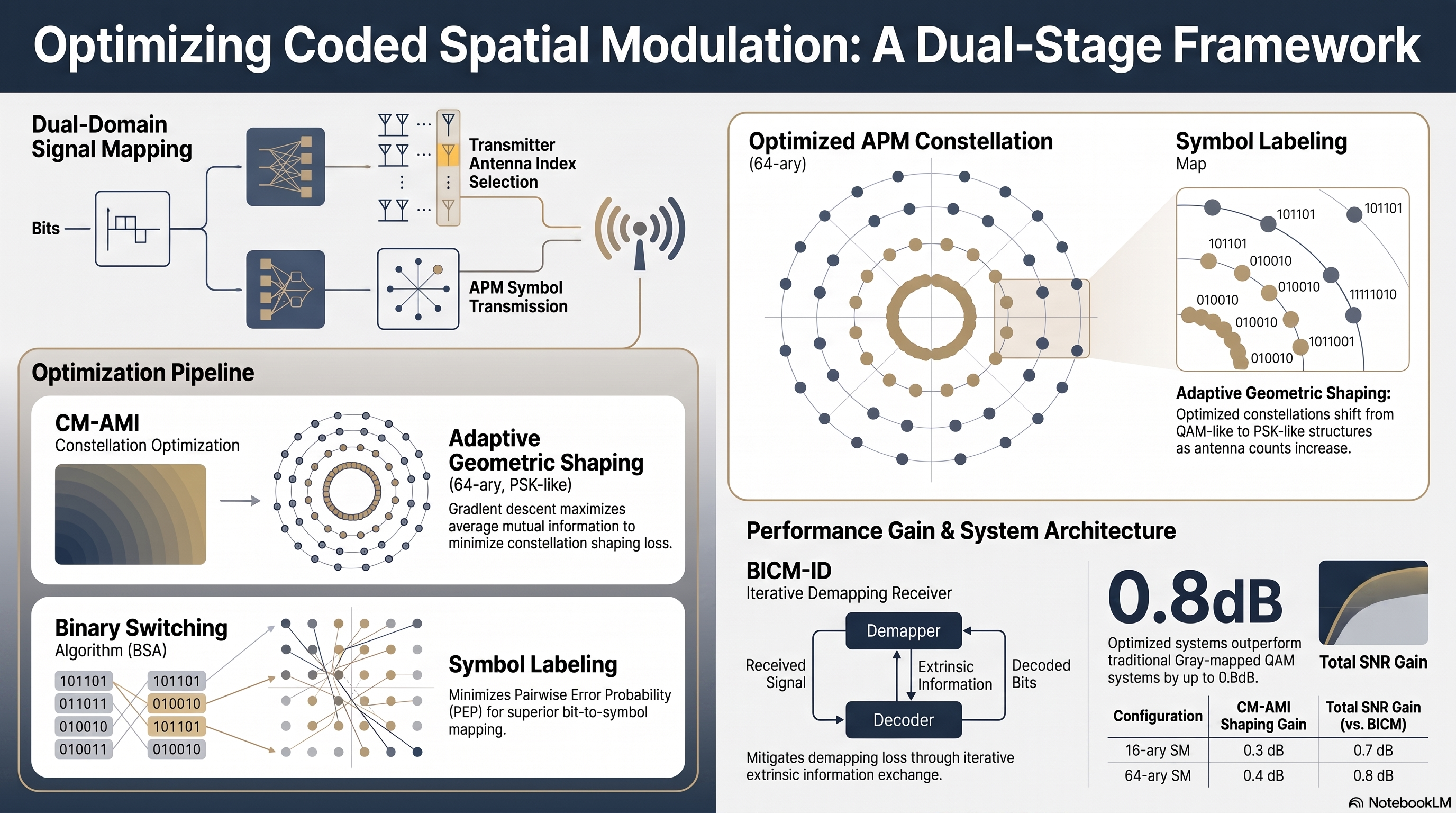 Constellation and Labeling Optimization for Bit-Interleaved Coded Spatial Modulation SystemZhecheng An, Jun Wang, Jintao Wang, Tengjiao Wang, and Jian SongIn 2017 13th International Wireless Communications and Mobile Computing Conference (IWCMC), 2017
In spatial modulation (SM) systems, the distribution of amplitude-phase modulation (APM) symbol causes the tradeoff of detection performance between APM symbol and active antenna, which infers the overall capacity of SM system. In this paper, the APM constellation and symbol labeling of SM system is investigated. The optimized APM constellation is designed to maximize the system coded modulation average mutual information (CM-AMI). The symbol labeling of SM system is optimized with binary switching algorithm (BSA) using the symbol detection pairwise error probability (PEP) criteria. Moreover, the proposed APM constellation and symbol labeling are applied in a coded spatial modulation (SM) system with the bit-interleaved coded modulation and iterative demapping (BICM-ID). Simulation result shows the BICM-ID SM system with proposed constellation and symbol labeling has a signal-to-noise ratio (SNR) gain compared to conventional constellation system and independent demapping system.
@inproceedings{2017-iwcmc-2,
  title = {Constellation and Labeling Optimization for Bit-Interleaved Coded Spatial Modulation System},
  author = {An, Zhecheng and Wang, Jun and Wang, Jintao and Wang, Tengjiao and Song, Jian},
  booktitle = {2017 13th International Wireless Communications and Mobile Computing Conference (IWCMC)},
  pages = {1998--2003},
  year = {2017},
  organization = {IEEE},
  doi = {10.1109/IWCMC.2017.7986590},
}